Six weeks of holiday baking can leave your oven looking like evidence at a crime scene, and running the four-hour self-clean cycle sounds like its own punishment, with the smoke, the smell, and the extra heat it dumps into your kitchen. One January I let mine go so long that when I finally opened the door, the bottom had gone black and crusted over, and I stood there wondering whether the smoke alarm would forgive me for turning the oven on at all. I poured a cup of coffee and started working through oven cleaning hacks instead.
These tricks skip that cycle entirely. The Overnight Baking Soda Paste does the hard work while you sleep, Wet Towels on the Oven Floor Overnight lift baked-on pie drips for free, and the Razor Scraper clears the cloudy film off the glass in minutes.
Overnight and Hands-Off
1. The Overnight Baking Soda Paste
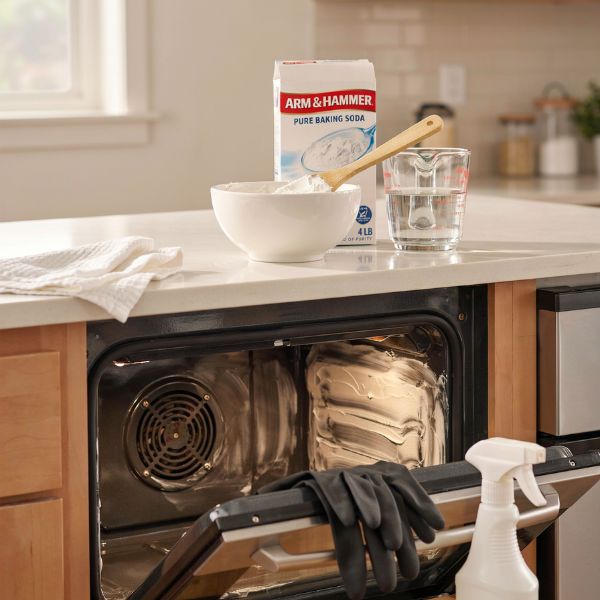
Half a cup of baking soda, 3 tablespoons of water, and a small bowl. Stir until it looks like frosting, then spread it across the cooled oven interior with a gloved hand or an old spatula. Cover the floor, the side walls, the ceiling, and the inside of the door, and keep it off the heating element, the gasket, and the fan vent at the back.
Leave it 8 hours or overnight. In the morning, spritz with white vinegar, let it fizz for a minute, and wipe it out with a damp cloth.
Under $1 a batch. A 4-pound box of Arm & Hammer runs about $4 at Walmart and makes a dozen batches. That replaces a can of spray-on oven cleaner, about $6 to $8 at Walmart. Five minutes active, overnight dwell.
2. The Steam Clean With a Dish of Water
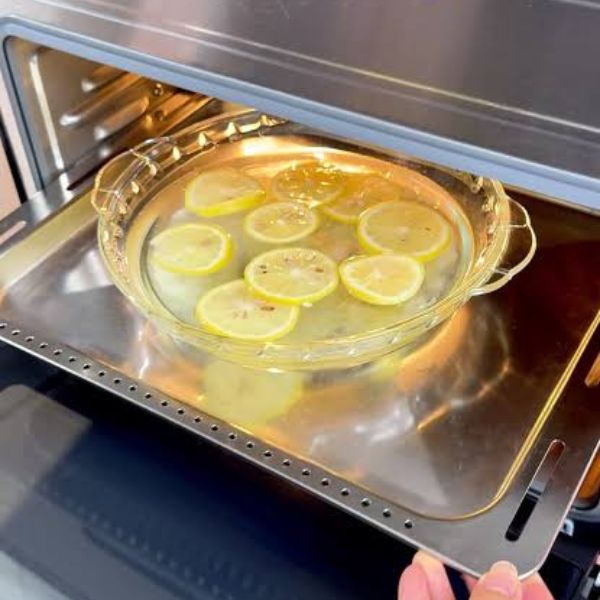
An oven-safe dish with 2 cups of water and 2 tablespoons of lemon juice or white vinegar does the softening for you. Set it on the middle rack, heat the oven to about 250°F, and let it run for 30 minutes. Turn it off, leave the door shut for another 20 minutes, then wipe the walls once they’re cool enough to touch comfortably. Use a glass or ceramic dish rated for oven heat, and open the door slowly.
I learned to love this one the year the turkey drippings boiled over on Thanksgiving and I had pies to bake the next morning. Steam loosened enough of it that a cloth handled the rest. Pantry staples put the cost at near $0, with about 10 minutes of actual work and 50 minutes of waiting.
3. Sweep the Loose Debris Out First
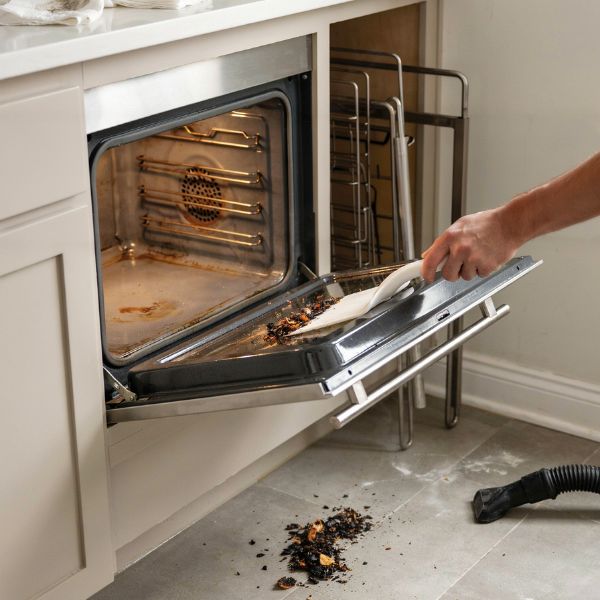
Paste works twice as fast on an oven that’s been emptied out first. Pull the racks and set them aside, then scrape up the burnt flakes and crumbs with a plastic bench scraper or an old plastic putty knife, about $3 to $5 at Walmart or any hardware store if you don’t own one.
Vacuum the floor and corners with the hose attachment, then wipe with a damp paper towel to catch the dust.
No added cost if a plastic scraper is already in a drawer. Ten minutes. Skip metal scrapers and steel wool entirely on the interior enamel, since they leave scratches that catch grease.
4. The Morning Vinegar Spritz and Rinse-Out
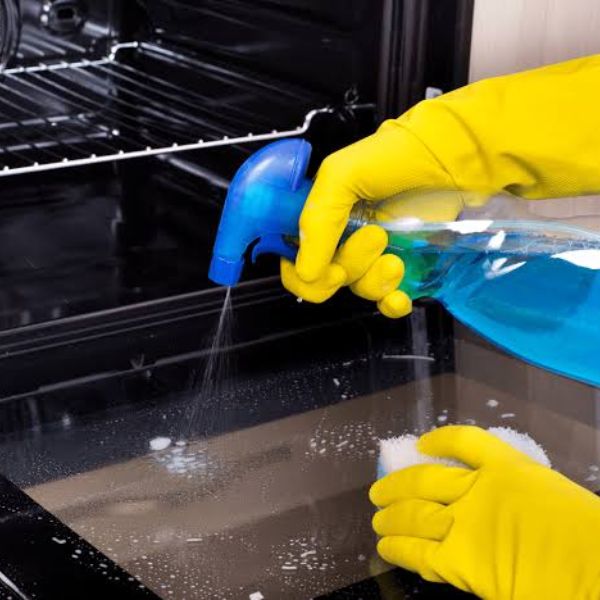
The morning after is where most people give up, because baking soda leaves a chalky haze that one wipe won’t clear. Mix equal parts white vinegar and water in a spray bottle, $1.25 at Dollar Tree, and keep a gallon of store-brand vinegar nearby, about $4 at Walmart.
Spray the pasted areas, let the fizzing settle, then wipe with a damp microfiber cloth. Rinse the cloth and go again. Four passes is normal for heavy holiday buildup, and the last pass should come back clean.
A six-pack of microfiber cloths costs around $7 at Walmart and beats paper towels, which shred on dried paste. Twenty minutes. Keep the vinegar off the rubber gasket.
5. Wet Towels on the Oven Floor Overnight
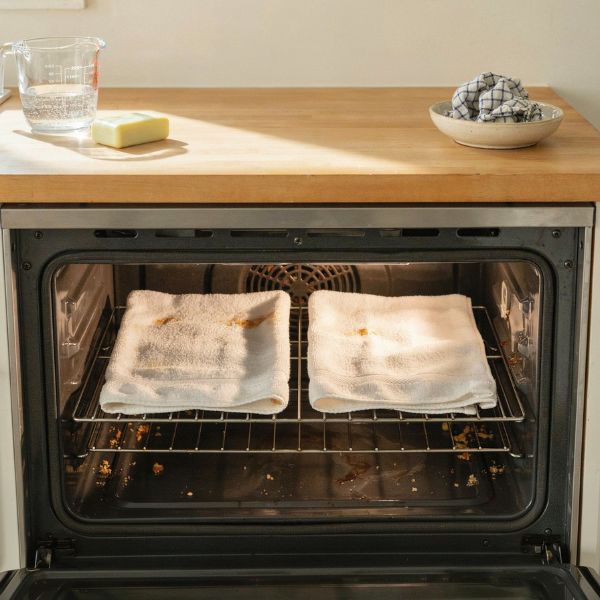
For an oven floor that took the brunt of the pie drips, this costs nothing and works while you sleep. Soak two old bath towels in very hot water with a squirt of dish soap, wring them out so they’re heavy-damp but not dripping, and lay them flat across the completely cool oven floor. Shut the door and leave them until morning.
Baked-on pie filling and sugary spills soften overnight without any scrubbing at all. Your cost is $0, and setup runs five minutes. Never turn the oven on with towels inside, and pull them out before you preheat anything.
6. Steam First, Then Paste, for Six Weeks of Buildup
Two easy oven cleaning hacks stacked together handle more than either one alone. Run the water dish at 250°F for 30 minutes as described above, let the oven cool fully, then spread the ½ cup baking soda to 3 tablespoons water paste over the softened mess and leave it overnight.
The steam opens up the hardened layer so the paste reaches the enamel instead of sitting on top of a crust. This is the approach for an oven that hasn’t been touched since Halloween.
Total cost under $1. About 40 minutes of active work spread across one evening, then the overnight wait. Wait until the interior is cool to the touch before any paste goes on.
7. The Second Pass on Stubborn Spots
Two nights sounds like a lot until you consider that neither one involves scrubbing. After the first overnight paste comes out, you’ll usually have a few dark spots left, typically on the floor and the lower back wall.
Mix a thicker spot paste: ¼ cup baking soda to 1 tablespoon water, and pack it on just those areas. Lay a damp paper towel over each patch so the paste stays wet and keeps working instead of drying into powder.
It’s the same box of baking soda, so call it under $1 again. Five minutes active, 8 more hours of dwell. Heavy buildup genuinely needs this second round, and that’s not a failure of the method.
8. Stage Everything Before Bed
Overnight oven cleaning only feels effortless if you aren’t hunting for supplies at 10 p.m. Set out the baking soda, a mixing bowl, an old spatula, rubber gloves (a pack costs about $4 at Walmart), the vinegar spray bottle, and a stack of microfiber cloths before you start.
Staging ahead turns a ten-minute task into something you can finish while the kitchen is already in cleanup mode after dinner.
Nothing to spend if the supplies are in the cabinet. Mixing and spreading takes five minutes once everything is out. Confirm the oven is off and cool, pull the racks before you start rather than after, and leave a note on the door so nobody preheats it for breakfast.
The Glass Door
9. The Brown Film on the Inside of the Glass
That cloudy brown film on the oven glass window is baked-on grease and sugar, not dirt, which is why glass cleaner only smears it around. Mix ½ cup baking soda with 3 tablespoons water into a spreadable paste and smooth a thin layer over the cooled glass. Let it dwell for 20 minutes. Wipe most of it away with a damp cloth, then hold a razor scraper flat against the glass and lift the rest in short, overlapping passes.
Under $1 in baking soda you almost certainly already have, versus about $6 for a can of spray-on oven cleaner at Walmart. Ten minutes active, 20 minutes dwell.
Keep the paste on the glass only. It does not belong on the rubber gasket that frames the door.
10. The Razor Scraper, and How to Hold It
A razor scraper is the one tool that earns its keep in oven cleaning, and a basic plastic-handled one from the paint aisle at Walmart or Lowe’s costs around $4 to $7. A 10-pack of replacement blades is around $5, and a dull blade is what causes scratches, so swap it when it starts skipping.
Keep the glass wet with paste or soapy water the entire time. Lay the blade almost flat against the surface, closer to a 10-degree angle than a 45-degree angle, and pull toward you in short strokes. Wipe the blade on a rag between passes so you are not dragging grit back across the glass.
Never take the scraper to painted trim, stainless, or the gasket.
Glass only.
11. A Hot Damp Towel to Soften the Film First
I remember a cookie-baking afternoon with the grandkids when we could not see a single tray through that door. Ten minutes under a hot towel, and we were back to watching the edges brown.
Before any scraping, give the film time to go soft. Open the door flat so the glass is horizontal, soak an old kitchen towel in the hottest tap water you can stand, wring it mostly dry, and lay it across the glass. The trapped heat and moisture loosen the grease so the scraper glides instead of chattering. The towel is free if you already own one, and a four-pack of kitchen towels runs about $5 at Walmart if you don’t. Two minutes to set up, 10 to 15 minutes to sit, then wipe.
12. Cleaning Oven Glass With Dishwasher Tablets
Cleaning oven glass with dishwasher tablets works because a wet tablet is a scrubbing block that brings its own detergent. Run one under warm water for a few seconds, then rub the flat side directly on the cooled glass in small circles. The detergent softens the grease, and the tablet’s texture does the abrading for you. Wear rubber gloves, because dishwasher detergent is caustic and will dry out your hands fast.
One tablet costs just a few cents when you buy a store-brand box, about $4 to $6 for Great Value at Walmart or the Aldi house brand. Ten minutes plus rinsing.
Rinse with a clean, damp cloth three or four times. Leftover detergent will bake into a white haze the next time you preheat.
13. The Melamine Sponge for Leftover Haze
If a faint gray haze lingers after the paste and the scraper, a melamine sponge takes it down. Mr. Clean Magic Erasers total about $4 to $6 for a four-pack at Target, and the store-brand versions work the same. Cut one in half, dampen it, and use light pressure in circles on the glass. Half a sponge handles one door in about 5 minutes, with no dwell time.
Melamine is a very fine abrasive, which is exactly why it works and exactly why it stays on the glass. Keep it off the stainless trim, the painted frame, and any printed temperature markings on the door, and never use it dry.
14. When the Film Will Not Budge
For the haze that survives two full passes, a soft cleanser is the next step up. Bar Keepers Friend Soft Cleanser costs under $4 for a 13-ounce bottle at Walmart. Put a dab on a damp cloth, work a small section for no more than a minute, and rinse completely before it dries. Test a lower corner first, and keep it off the gasket entirely.
Here is the honest part. Some oven glass is permanently etched from years of heat and spills, and no amount of scrubbing brings it back. If two rounds of paste and a fresh blade leave the same shadow, that shadow is in the glass.
15. The Gap Around the Edge of the Glass
Run your finger along the bottom edge of the oven door glass where it meets the metal frame. That narrow channel collects crumbs, pie filling, and gray paste residue, and it is the reason a door can look clean from three feet away and grubby up close.
An old toothbrush and a few cotton swabs clear it out. Dip the brush in leftover baking soda paste, work the channel in one direction, then dry-swab the corners. That’s $0 with a retired toothbrush, or about $4 for a detail brush two-pack at Walmart, and ten minutes either way.
When my kids were small, I cleaned the glass and called the door done. The channel told a different story.
16. The Vinegar Polish That Finishes the Job
Streak-free glass without a drop of commercial glass cleaner comes down to a 1:1 mix of white vinegar and water. Fill a spray bottle, mist the glass lightly once all the paste residue is gone, and buff dry with a microfiber cloth in one direction. The vinegar neutralizes any baking soda film you missed, so the glass doesn’t go chalky an hour after you walk away.
A spray bottle is $1.25 at Dollar Tree, a gallon of white vinegar runs about $4 at Walmart and will outlast this project by a year, and a 12-pack of microfiber cloths is around $8. Compare that to about $4 for a single bottle of Windex at Target.
17. Between the Panes, Manual First
Check the manual before you touch the door hinges. On some ranges, the door lifts off, and the inner panel unscrews so you can reach the inside surfaces. On plenty of others, the panes are sealed as a unit and were never meant to come apart, and prying is how people end up pricing a replacement door glass through an appliance parts seller, which costs more than every supply in this article combined.
If your manual does show the procedure, the cleanup itself is easy. The same baking soda paste on a damp microfiber cloth, a wipe, a vinegar rinse, and reassembly.
Under $1 in paste. Figure 15 to 20 minutes, including taking the door off and putting it back.
18. The Hanger Trick for Doors That Do Not Open
Some oven doors do not come apart at all, and those models often have thin vent slots along the bottom edge of the door. Straighten a wire hanger, leaving a small hook at one end, wrap a thin microfiber cloth around it, and secure the cloth tightly with two rubber bands so it cannot slip off inside the door. Dampen the cloth with the vinegar and water mix and work it side to side through each slot.
Nothing out of pocket, $0, if you have a wire hanger and a cloth on hand. About 10 minutes.
Go slowly and never force the hanger. Rushing is how the cloth slips loose and ends up stuck somewhere you can’t reach it.
Racks and Stovetop
19. Oven Racks Soaked in the Tub Overnight
Cleaning oven racks is the job nobody volunteers for, and the tub does most of it for you. Lay an old bath towel in the tub first so the racks can’t scratch the finish, then set them on top. Run hot water until they’re covered, toss in four or five dryer sheets or a long squirt of dish soap, and go to bed. The softeners break down baked-on grease while you sleep, so morning is a wipe with a non-scratch pad instead of a twenty-minute arm workout, then a rinse and full dry.
This works especially well right after a holiday roast, when the racks come out looking like they need to be replaced rather than cleaned.
Pennies. A box of 120 Bounce sheets comes in under $6 at Walmart. Five minutes active, 8 hours soaking, and it replaces a can of oven cleaner spray.
20. Cast Iron Grates, Soak First and Paste Second
The best stovetop cleaning hacks start in the sink. Pull the grates off a fully cooled stovetop and set them in a sink lined with a towel. Cover with hot water and a good squirt of dish soap and let them sit for 20 minutes to loosen the crumbly debris. Then work the same baking soda paste into the baked-on rings with a nylon brush, scrub for about 10 minutes, rinse, and dry them completely before they go back on.
Under $1, assuming dish soap is already under your sink. That’s the job a can of Easy-Off degreaser does for about $6 at Walmart.
I ran a set through the dishwasher years ago and pulled out grates with a dull, chalky cast that never came back. Check your manual before you try it, and skip steel wool entirely.
21. Burner Caps, Soaked and Fully Dried
Back when my kids were little, Saturday pancakes meant a burner cap wearing a halo of scorched batter by noon. The fix hasn’t changed: lift the caps off a cool stovetop, soak them 15 minutes in warm soapy water, and wipe with a non-scratch pad. Nothing to buy beyond the dish soap you already have, about $3 a bottle at Walmart, and the whole thing takes about 20 minutes.
The part people rush is the drying. Put the caps back damp, and you can get an uneven flame or a burner that won’t light cleanly, so dry them completely and seat each one flat in its groove.
Never run burner caps through the oven’s self-clean cycle, and keep abrasive pads away from the finish.
A Clean Oven Awaits
Six weeks of holiday baking didn’t ruin your oven overnight, so you don’t need to fix it overnight either. That crime scene on your oven floor is real, and so is the dread of tackling it after every other inch of your kitchen is already clean. These oven cleaning hacks work because they let the grease do the hard work while you sleep.
Pick one spot tonight, mix half a cup of baking soda with 3 tablespoons of water, spread it, and go to bed. That smoke alarm will have nothing to say to you in the morning.