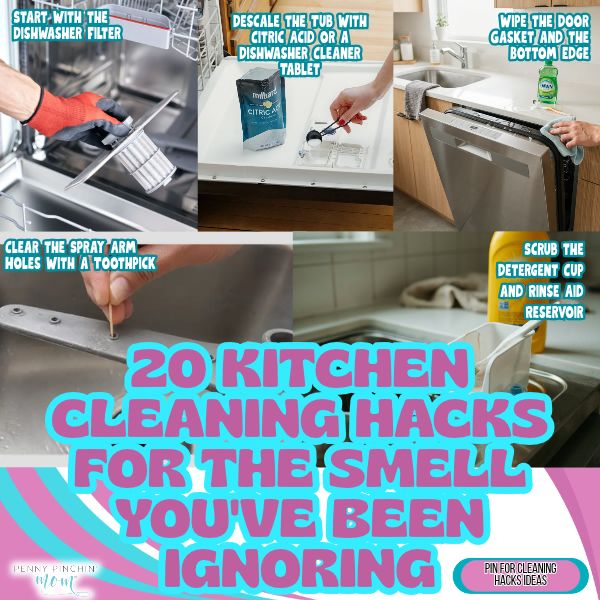
The dishwasher washes everything except itself, and after a big cooking week, yours is probably overdue. I ran mine twice a day for a week straight over Thanksgiving one year and never once pulled the filter out, until the smell told on me. When I finally twisted it loose that Sunday, I found most of a holiday dinner sitting in it.
These kitchen cleaning hacks start where the smell actually starts. The dishwasher filter twists out in seconds and takes most of the odor with it. Citric acid clears the buildup you can’t see, and a toothpick run through the spray arm holes fixes dishes that come out spotty for no reason. You’ll also get the garbage disposal and sink drain, plus the microwave and the fridge, the parts nobody cleans until they stop working right. Treat it as a kitchen cleaning checklist and work it in any order you like.
Dishwasher
1. Start With the Dishwasher Filter
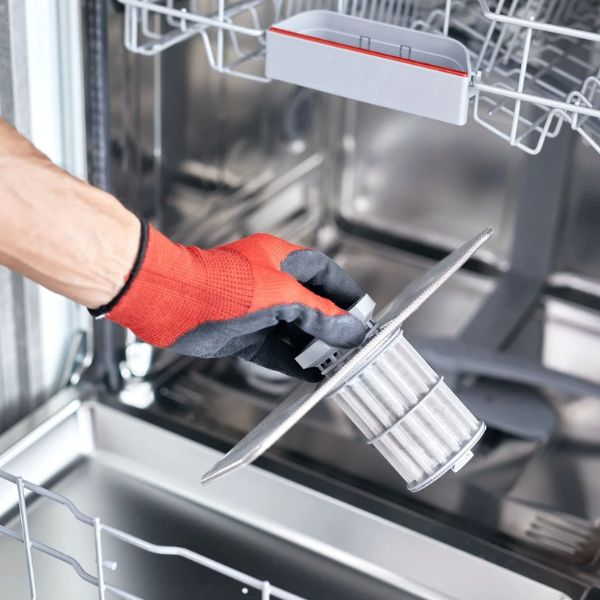
If your dishwasher smells, start here. Most people have never touched this part. Open the door and slide the bottom rack out so you can see the floor of the tub, where a cylindrical piece near the back or center twists counterclockwise to release, usually with a flat mesh plate underneath it that lifts out at the same time.
Rinse both under hot running water and work the mesh gently with a soft brush. An old toothbrush does it, or a new one runs $1 to $2 at Walmart. Drop the filter back in and twist clockwise until it locks.
Hands-on time is 5 to 10 minutes, no soaking required. Skip wire brushes and scouring pads; they tear the fine mesh.
2. Descale the Tub With Citric Acid or a Dishwasher Cleaner Tablet
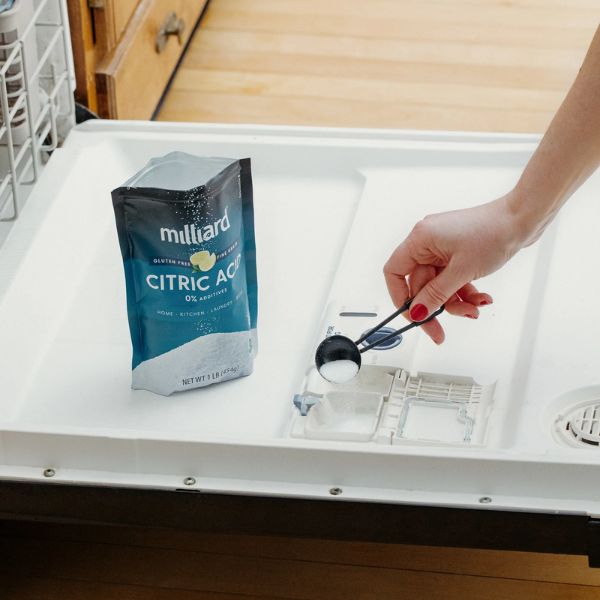
Hard water leaves mineral scale inside the machine, and it shows up as cloudy glasses and weak spray, and it shortens the life of the appliance. Descaling is the fix, and it’s worth doing when you can see chalky white film on the tub walls or the heating element.
Plain citric acid powder costs $6 to $10 for a bag at Walmart or on Amazon, and one bag lasts many cycles. A dishwasher cleaning tablet like Affresh or Finish Dishwasher Cleaner comes in around $6 to $9 for a 3-pack. Either one goes in an empty machine on the hottest cycle.
Five minutes of your time, about an hour of machine time, monthly. Check your owner’s manual before using vinegar, since some manufacturers warn it degrades rubber parts over time. Prices here reflect what I found at Walmart recently and shift by region.
3. Wipe the Door Gasket and the Bottom Edge
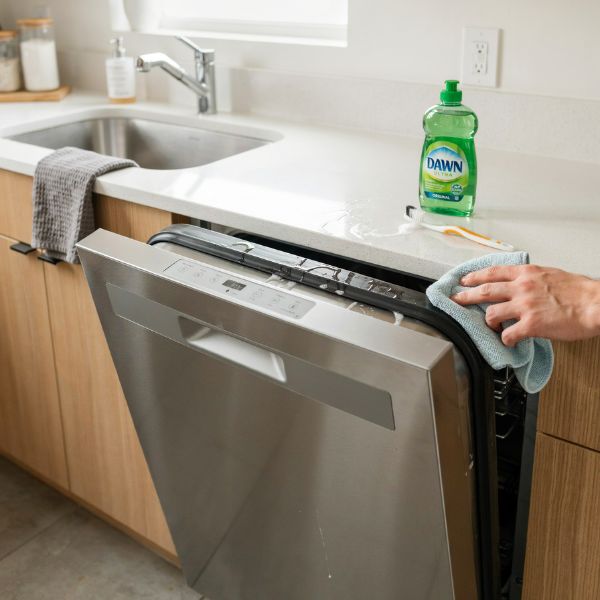
Run a finger along the rubber gasket around the door, and you’ll find the gunk the wash cycle never reaches. Same for the lip at the very bottom of the door, below where the spray hits. Standing water and grease pool there and go sour.
Warm water with a few drops of dish soap on a soft cloth handles it. A bottle of Dawn goes for $3 to $4 at Target, and you already have it under the sink. Use an old toothbrush to get into the folds and ridges, then dry the rubber with a towel.
Ten minutes, nothing new to buy. No bleach on the gasket; it breaks the rubber down, and a replacement seal costs far more than the five minutes you saved.
4. Clear the Spray Arm Holes With a Toothpick
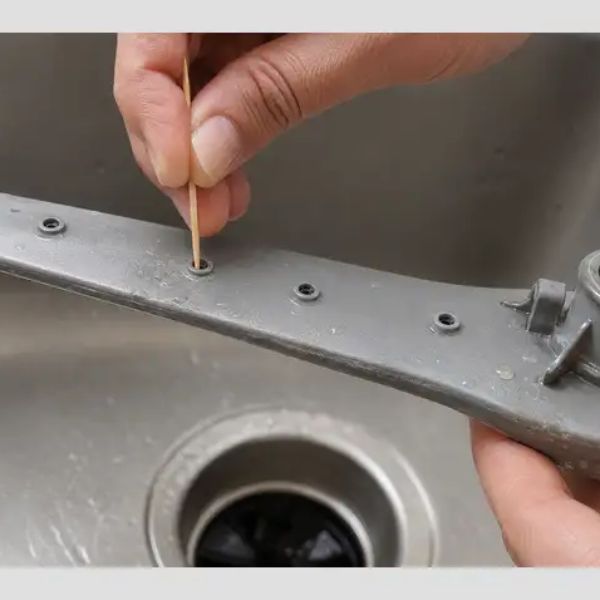
Water reaches your dishes through a row of small holes in the spray arms, and food particles plug them one at a time until half the rack comes out dirty. You don’t need a product for this. A box of toothpicks runs $1 to $2 at Walmart and will outlive the appliance.
Most lower spray arms lift straight off, and upper ones usually unscrew with a plastic cap. Work a toothpick into each hole, then rinse the arm under the faucet so the loosened bits wash out instead of settling back in.
Reinstall and give the arm a spin with your hand to be sure it turns freely. Figure 5 to 10 minutes. Don’t use a metal pin; it can widen or scratch the openings.
5. Scrub the Detergent Cup and Rinse Aid Reservoir
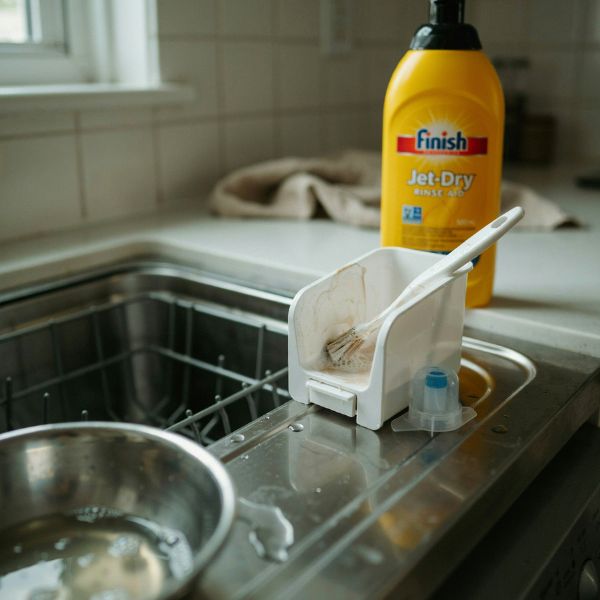
The detergent cup builds up a waxy film from old powder and half-dissolved pods, and once that film coats the hinge, the flap stops opening all the way. The year my dishwasher kept leaving a sticky lump in the cup, I blamed the detergent. It was the dispenser.
Dip an old toothbrush in warm, soapy water and scrub inside the cup, around the flap, and into the hinge. Wipe the rinse aid reservoir cap at the same time, then dry everything so the flap isn’t gummy when it closes.
Five minutes, no purchase needed. While you’re there, top off the rinse aid if the indicator is low. A bottle of Finish Jet-Dry costs $5 to $7 at Walmart and cuts the spotting on glassware noticeably.
6. Clean the Racks, Tines, and Silverware Basket
Racks take the worst of it. Food lodges in the silverware basket slots, and the vinyl coating on the tines chips over time, which lets the metal underneath rust and leave orange marks on your dishes.
Slide both racks out, take the basket to the sink, and soak it in warm, soapy water for about 10 minutes while you wipe down the rack corners and the wheels. An old toothbrush clears the basket slots fast.
Check the tine tips while the racks are out. Replacement vinyl tip caps run close to $8 to $10 a pack on Amazon, or rack repair paint will cost you around $10 to $12, and either beats replacing a rack. Budget 15 minutes for the whole job.
7. Clean the Door Front and Control Panel Without Soaking It
Fingerprints and cooking grease land on the dishwasher door front all week, and the handle gets it worse. Painted and plastic fronts come clean with warm water and a few drops of dish soap on a microfiber cloth, then a dry cloth right behind it.
Stainless fronts do better with a stainless cleaner like Weiman Stainless Steel Cleaner, $6 to $8 at Target, worked in the direction of the grain so you don’t leave streaks. If you want a fuller rundown of what’s worth buying, our guide to the top kitchen cleaning products that work covers it.
Five to ten minutes. Never spray any cleaner straight at the control panel. Spray the cloth instead, so moisture can’t seep behind the buttons.
8. Keep It From Smelling Again Between Cleanings
What makes all of the above stick is the daily habits underneath it. Scrape plates instead of rinsing them, since dishwasher detergent needs something to grab onto. Run the machine at least every other day so food doesn’t sit in a warm, closed box. And crack the door open an inch after the cycle ends so the tub dries instead of staying damp.
That habit costs nothing and does more than the hanging dishwasher fresheners that sit at $4 to $6 a pack. Set a monthly reminder on your phone for the filter and a descale cycle on the same day, and the odor simply stops coming back.
Running it full and on the right cycle saves money too, which our post on saving money running your dishwasher breaks down.
Disposal and Sink
9. Garbage Disposal: Ice Cubes and Coarse Salt
Two cups of ice cubes plus about 1/4 cup of coarse or rock salt knock the gunk off the grinding chamber walls without anyone reaching anywhere near the blades. With cold water running, flip the disposal on and feed in the ice, then the salt. Let it grind until the noise evens out. The whole thing takes two or three minutes.
Kosher or rock salt costs around $1 to $2 a box at Walmart, and ice is already in your freezer. That replaces a garbage disposal cleaning pod like Glisten Disposer Care, which runs $6 to $8 for a pack of four.
Never put a hand in the disposal, not even to reposition the ice. This method is hands-free on purpose.
10. Scrub the Underside of the Splash Guard
That rubber splash guard sitting in the drain opening is where the smell actually lives. Food residue collects on the underside of those flaps, out of sight, and no amount of grinding ice touches it.
Turn the disposal switch off at the wall first. From above, peel the flaps back with your fingers and scrub the undersides with an old toothbrush and a few drops of dish soap, then run cold water to rinse. Five minutes, no dwell time. If the flaps are torn or so stiff they stay folded over, a replacement splash guard is $8 to $12 at Lowe’s and seats by hand.
When the grandkids are over and the disposal is running, I have them stand back from the sink. Same rule for grown-ups: hands stay out of the drain opening, always.
11. Finish With Citrus Peels and Cold Water
Lemon or orange peels left from breakfast give the drain a clean smell once the scrubbing is done. Cut the peels into a few pieces, drop them in with cold water running, and let the disposal grind for about 30 seconds. Takes under a minute.
A lemon costs about $1 at most grocery stores, and you’ve already used the juice. Store-bought disposal fresheners run $5 to $7 for a pack, and they do the same single job.
Worth being clear: citrus deodorizes; it doesn’t clean. Peels on top of a dirty splash guard just make a dirty splash guard smell faintly like lemon. Do this after items 9 and 10, not instead of them.
12. Sink Drain Odor: Baking Soda and Hot Tap Water
When the drain smells sour even after the disposal is clean, the odor is coming from residue inside the pipe. Pour about 1/2 cup of baking soda straight down the drain, let it sit 15 minutes, then flush with hot water from the tap for a full minute. Total time is 20 minutes, and almost all of it is dwell.
A box of baking soda is about $1 at Walmart or Aldi and handles several rounds of this. Drain deodorizer tablets run $5 to $7 for a package.
Use water straight from the hot tap. Boiling water can soften or warp PVC drain pipes and loosen the joint seals, which turns a smell problem into a plumber problem.
13. Pull the Basket Strainer and Clean the Flange
Lift out the basket strainer and turn it over. The underside and the rim of the drain flange it sits in collect a gray film that you can’t see from standing height, and it contributes more to sink odor than most people expect.
Scrub both with an old toothbrush and warm, soapy water, paying attention to the gasket ring under the strainer where it seats. Rinse and set it back in. Five to ten minutes, no soaking required.
Dish soap goes for $3 to $4 a bottle. If your strainer is pitted or the rubber seal is cracked, a replacement basket strainer costs around $8 to $12 at Walmart or on Amazon.
14. Soak the Faucet Base and Aerator
White crust ringing the base of your faucet and spitting water from the spout are both hard water mineral buildup. Fill a small plastic bag halfway with white vinegar, rubber-band it over the end of the spout so the aerator sits submerged, and leave it 30 minutes to an hour. Scrub the base with an old toothbrush while you wait, then remove the bag and run the water to flush.
A gallon of white vinegar is $3 to $4 at Walmart. CLR comes in under $8.
Check your faucet’s manual first. Some manufacturers warn against vinegar on coated finishes like brushed nickel and bronze, so rinse thoroughly and keep the soak short.
15. Swap Sponges Often and Wash Dishcloths Hot
A sponge that smells sour has already lost the argument, and no amount of rinsing fixes it. Replace kitchen sponges every one to two weeks. A 3-pack runs $3 to $5 at Walmart or Target. Pennies a week, for the one tool that touches every dish you own.
Cotton dishcloths and bar mops are the cheaper long game. A 12-pack costs around $10 to $14, and washing them in hot water weekly, or every couple of days if you cook daily, keeps them from turning musty. Hang them on a hook where air gets at them. If yours smell no matter what you do, our guide to kitchen washcloths that don’t smell walks through which fabrics hold up.
Microwave and Fridge
16. Microwave Steam Method: Wipe, Don’t Scrub
Fill a microwave-safe bowl with about a cup of water and add either a few lemon slices or 2 tablespoons of white vinegar. Stand a wooden spoon or a chopstick upright in the bowl so the water can’t superheat and boil over when you move it. Run it for 3 to 5 minutes, then leave the door shut for another 5 minutes while the steam loosens everything. Oven mitt to pull the bowl out, because it will be hot, then wipe the interior with a damp cloth.
A lemon costs about $1, and a gallon of vinegar is around $4 at Walmart, which beats a tub of microwave cleaning wipes at $4 to $5 that you’d use up in a month. Hands-on time is 10 to 12 minutes, most of it waiting.
17. Turntable and Roller Ring
Lift the glass turntable out along with the plastic roller ring underneath it, the part that holds the little wheels. Both go in the sink with warm water and dish soap, and that ring needs a minute of real attention because sauce drips down into the wheel wells and dries there. Dry both pieces fully before they go back in.
I was reheating a plate of leftover pizza for my grandkids a while back and noticed the turntable grinding instead of turning. The roller ring was the problem, not the motor.
No cost at all beyond the dish soap already by your sink, about $3 to $4 for a bottle of Dawn at Target. Check your manual first; some turntables are dishwasher-safe. Figure 5 to 10 minutes.
18. The Door Seal, Window, and Latch
If your microwave door sticks or won’t shut cleanly, the problem is usually dried splatter wedged in the seal and latch, not a broken door. The window itself gets a hazy brown film from steam that no amount of fast wiping touches.
Dampen a cloth with warm soapy water, wring it out well, and run it around the seal where the door meets the frame. An old toothbrush, or a new 2-pack for about $2 at Walmart, gets into the latch slots and the grooves along the edge. Finish the window with a dry microfiber cloth so you don’t leave streaks.
Keep the cloth damp, never dripping, since water running into the door vents is a real problem.
Five minutes.
19. Keypad, Handle, and Vent Grille
Fingerprints and splatter come off a keypad with a barely damp microfiber cloth; nothing sprayed directly on it. Spray gets into the seams around the buttons and can short out the control panel.
Mist the cloth instead, wipe the pad, then the handle, then the vent grille along the top or front where grease and dust build a gray fuzz. A dry cotton swab, about $2 for a big box, clears the slots in the grille.
A 12-pack of microfiber cloths comes in around $7 at Walmart and replaces disinfecting wipes at roughly $4 a tub, over and over. Hands-on time is 5 minutes.
20. Fridge Interior Wipe-Down
When something leaks on a shelf, and you push a jar over it instead of dealing with it, that’s how a fridge starts to smell. I did exactly that with a jar of pickles one winter and found the sticky ring it left behind in March. The fix is a bowl of warm water with 1 to 2 tablespoons of baking soda stirred in, no spray cleaner at all.
Work top shelf down so drips land on surfaces you haven’t done yet. Wipe the shelves and walls first, then the inside of the door. Go back over everything with a clean, damp cloth and dry it.
A box of baking soda costs about $1 at Aldi and will clean the fridge several times over. No bleach and no ammonia on food-contact surfaces, ever. Plan 15 to 20 minutes for a full interior.
A Cleaner Kitchen Starts Now
That smell your dishwasher gets after weeks of hard use isn’t your imagination, and it isn’t a sign you need a new machine. These working parts have been quietly doing their job without anyone checking on them, and now they’re asking for five minutes of attention.
None of this takes special skills or a whole Saturday. You just need to actually pull the parts out and look at them, something most of us never do until the smell forces the issue. When you’re ready to keep going, cleaning kitchen cabinets is the natural next stop, and wood fronts want a barely damp cloth and nothing stronger than the dish soap you already own.