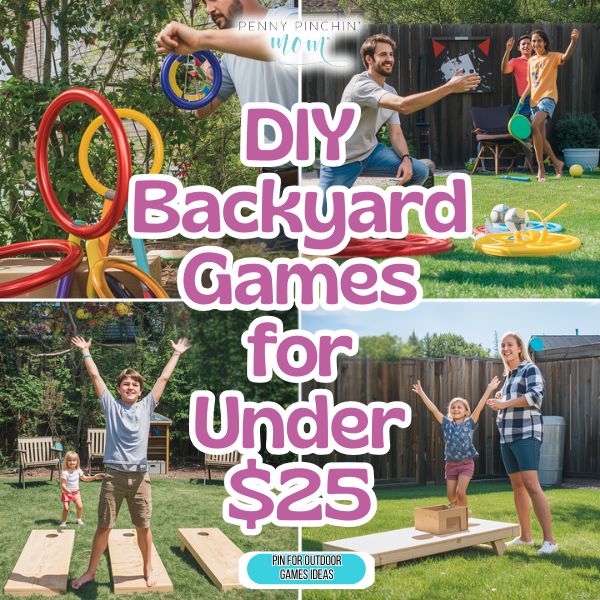
You want your kids outside more, but those ready-made yard game sets cost $80-$150. Meanwhile, they’ll probably play with them for three weekends before losing half the pieces or getting bored.
This guide shows you how to build a backyard game set (5-6 different games your family will actually play) for under $25 total. You’ll learn which games give you the most play value per dollar, where to find materials at dollar stores versus hardware stores, which builds need zero tools, and how to store everything without cluttering your garage. Most families complete this project in one afternoon, and the games hold up for entire summer seasons.
The secret is combining smart dollar store finds with strategic hardware store purchases and leftover household items. You’re not building elaborate carnival-quality games; you’re creating functional versions that kids (and adults) enjoy playing without the markup of branded sets. By the end of this, you’ll have ring toss, ladder ball, cornhole-style bean bag toss, giant tic-tac-toe, lawn dice, and a simple obstacle course ready to go.
What Games to Build and Why (Strategic Picks for Maximum Play Value)
Not all backyard games are worth DIY-ing on a tight budget. Focus on these six games because they share overlapping materials, require minimal cutting or assembly, and work for multiple age groups:
Ring Toss costs $2-$3 to build and works for ages 3-12. You need one plunger or dowel base plus 6-8 rope rings or canning jar lids. Setup takes 5 minutes, zero tools required. Kids naturally create their own distance challenges, so one set entertains for 20+ minutes at a time.
Ladder Ball runs $4-$6 for materials (PVC pipe and golf balls with paracord). This is your only build requiring a saw, but most hardware stores cut PVC for free. It’s the most requested game at family gatherings and keeps teenagers engaged when simpler games don’t.
Bean Bag Toss Board costs $5-$8, depending on the board source. Use a cardboard box, foam board, or scrap plywood. You need 8 bean bags total (four per team), which you’ll make from dollar store bandanas and dried beans. Two players or teams compete, so it handles the “I’m bored, there’s nothing to do” complaint for 15-30 minutes.
Giant Tic-Tac-Toe is your $2 game. Spray paint a grid on an old shower curtain or use rope to create lines on grass. Make X and O markers from painted rocks, frisbees, or paper plates. Setup is 10 seconds. Younger kids love the oversized format, and it teaches strategy without feeling like a lesson.
Lawn Dice cost $3-$4 (large foam cubes or cardboard boxes covered in contact paper). Roll for numbers, create addition/subtraction challenges, or invent movement games (“roll a 4, do 4 jumping jacks”). These work as both a game and a sneaky math practice tool.
Simple Obstacle Course uses $3-$5 in pool noodles, rope, and stakes. Set up limbo bars, weave courses, or hurdles. Reconfigure it weekly to keep interest high. This is your backup game when everyone’s tired of turn-taking games.
These six games share materials: paracord works for ladder ball and obstacle courses, paint markers work for multiple games, and bean bags double as tic-tac-toe markers if needed. You’re building a system, not individual games.
The $25 Shopping List and Where to Buy What
This list assumes you own basic household items (scissors, tape, ruler) but need to buy everything else. Adjust based on what you already have:
Dollar Store ($11-$13 total):
- 4 bandanas in two colors ($4): bean bags for the toss game
- 2 cans spray paint, any color ($2): tic-tac-toe grid, dice dots
- 1 bag dried beans or rice ($1): bean bag filling
- 1 plunger ($1): ring toss base
- 2 pool noodles ($2): obstacle course
- Rope or twine, 20 feet ($1-$3): ladder ball, obstacle stakes
Hardware Store ($9-$12 total):
- 10 feet of ½-inch PVC pipe ($3-$4): ladder ball, cut into 6 pieces
- 6 golf balls ($3-$6 for used ones, check thrift stores first): ladder ball
- Paracord, 15 feet ($3): connects golf balls for ladder ball
- 4 wooden stakes ($2, optional): secure obstacle course
Free/Household Items:
- Cardboard box (approximately 2×3 feet): bean bag toss board
- Old shower curtain or flat sheet: tic-tac-toe grid
- Rocks or paper plates: tic-tac-toe markers
- Empty tissue boxes (2): lawn dice if you skip foam cubes
Total: $20-$25, depending on sales and whether you find used golf balls.
Substitutions that save $3-$5:
Skip the plunger and use a sturdy stick pushed into the ground for ring toss. Make rope rings instead of buying canning lids. Use cardboard boxes instead of foam cubes for dice. Build a bean bag toss with a cardboard box instead of plywood. These swaps reduce quality slightly but keep you well under budget.
Buy everything in one trip. Dollar stores often run “$1 or less” promotions on craft supplies and outdoor items in spring; stock up then. Hardware stores sell PVC pipe remnants or short pieces at discounts. Ask at the cutting station.
How to Build the Core Games (Ring Toss, Ladder Ball, Bean Bag Toss)
Ring Toss (5 minutes, no tools):
Push the plunger into grass or dirt, rubber end down. The handle becomes your target post. Make rings by cutting rope into 2-foot sections and tying ends together, or use canning jar lid rings. Space the throwing line 4-6 feet away for young kids, 8-10 feet for older players. Store rings on the plunger handle.
Ladder Ball (30-40 minutes, saw required for PVC):
Have the hardware store cut PVC into six 18-inch pieces (two sets of three for each ladder side). Drill a golf ball through the center or use a nail to create holes (takes 2 minutes per ball with a manual drill). Thread 12-inch paracord sections through two balls, knotting at both ends to create bolas. You need three bolas per team. Assemble the ladder by laying three PVC pieces parallel on the ground, 13 inches apart, then connecting with crossbars using duct tape or zip ties at the top, middle, and bottom. This won’t be professional-grade, but it stands up and functions. Store flat against a wall.
Bean Bag Toss Board (20-30 minutes, no tools):
Cut three 6-inch circles in a cardboard box (approximately 2×3 feet) or foam board. Space holes 8 inches apart. Assign point values (write with marker: 1 point, 3 points, 5 points). Prop the board at a 30-degree angle using bricks, wood scraps, or folded cardboard. Make bean bags by laying one bandana flat, placing ¼ cup dried beans in the center, gathering the corners, and tying with a string. Make eight bags (four per color). Throwing distance: 6-8 feet for kids, 10-12 feet for adults. Store bags inside the box.
How to Build the Quick-Setup Games (Tic-Tac-Toe, Dice, Obstacle Course)
Giant Tic-Tac-Toe (10 minutes, no tools):
Spray paint a grid (two horizontal lines, two vertical lines creating nine squares) on an old shower curtain or flat sheet. Each square should be roughly 12×12 inches. Let dry for 30 minutes. Markers: paint five rocks with X’s, five with O’s. Alternative: use paper plates, write X on five, O on five. Store the curtain folded with markers in a plastic bag.
Lawn Dice (15-20 minutes, minimal tools):
Use two empty tissue boxes or cut cardboard into 6×6-inch cube templates. Cover with white contact paper or paint it white. Use a black marker or paint to add dots (1-6 on each side). For sturdier dice, fill boxes with crumpled newspaper before sealing. Roll on grass for number games, races, or math challenges. Store stacked in a small bin.
Pool Noodle Obstacle Course (10 minutes, no tools):
Push wooden stakes into the ground 3-4 feet apart. Thread pool noodles onto stakes horizontally for limbo bars (adjust height). Use a rope tied between stakes for weaving courses. Create hurdles by bending pool noodles into arches and securing ends with stakes. Reconfigure weekly by changing heights, distances, or patterns. Store noodles and stakes in a bucket.
Total build time: 90-120 minutes for all six games if working solo. Cut that in half with a helper. None of these requires precision; wobbly ring toss posts and slightly crooked tic-tac-toe grids work fine.
Storage and Weatherproofing (Keep Games Playable for Multiple Seasons)
The enemy of DIY games is water damage and lost pieces. Store everything in one 18-gallon plastic storage bin ($5-$8 at discount stores, not included in the $25 budget but worth it).
Inside the bin:
- Ladder ball and ring toss disassemble in 30 seconds; PVC pieces and plunger lay flat
- Bean bags and tic-tac-toe markers go in gallon Ziploc bags (label with marker)
- Pool noodles can be cut in half for easier storage or stored separately in a garage corner
- Dice and small pieces stay in a shoe box inside the bin
- Fold the tic-tac-toe grid around the bean bag toss board
Between games:
Bring bean bags, cardboard, and fabric items inside after use. PVC ladder ball and plunger ring toss can stay outside for weeks without damage, but bean bags mold if left in wet grass overnight. Spray paint holds up to rain, but cardboard warps. Swap to a plastic storage lid or foam board if you want to leave the toss board outside permanently.
End of season:
Wipe PVC and plunger with a damp cloth, check bean bags for holes (restitch if needed), and store everything in the bin in a garage or shed. Games built this way last 2-3 seasons before needing repairs or replacement. The $25 investment breaks down to $8-$12 per summer if materials last three years.
Choose your builds based on your family’s ages and interests. If you have teenagers, prioritize ladder ball and bean bag toss over ring toss and dice. If you’re working with kids under 8, focus on tic-tac-toe, ring toss, and obstacle courses. You don’t need all six games to create a fun backyard setup. Three well-chosen games that get regular use beat six games collecting dust.
Grab your $25 shopping list this weekend.
In your first 60 minutes: Build ring toss, tic-tac-toe, and bean bags (the three zero-tool games).
Before you finish the rest: Let the kids test these three games to see which ones are instant hits, then focus your remaining 30-60 minutes on building those game styles.
That immediate play session shows you which games need tweaks and which ones are keepers, so you’re not wasting time on builds nobody wants to play.