Whether you throw yours in a towel warmer for a luxury experience or just reach for whichever one happens to be closest to the shower door, the towel can ultimately make or break your entire bathing experience. If you’ve ever used a thin, low-quality towel, you know how it can really throw your whole day off.
But which material is actually best for bath towels? Obviously, you want something absorbent that doesn’t feel like sandpaper, but beyond that, does it really matter?
On my own search to upgrade my bathroom, I came across plenty of info on this exact subject. And now I’m here to share my findings and help you find out the best bath towel material for your home.
Best Materials for Bath Towels
There are a surprising number of factors that go into figuring out the best materials for bath towels. You want something that will hold up over time, but you don’t want it to be scratchy and uncomfortable. You want something that’s soft on the skin, but will actually dry you off.
Here is what I looked at and considered when I was creating this list of the best bath towel materials and fabrics.
What to Consider
- Absorbency- The whole point here is to make sure you’re dry, so all of these materials had to have superior absorbency to wick moisture away from your body and trap it in the towel.
- Softness- Bathing is supposed to be a soothing, relaxing experience, and you don’t want to ruin that by using a stiff, scratchy towel. All of these materials have a soft feel to them.
- Drying time- Some of us like to take a few showers a day, and the last thing you want is to reach for your towel only to find that it’s still damp. These bath towel materials not only dry you fast, but they also dry quickly themselves, so no more moldy towels.
- Easy care- If you can’t toss it in the washing machine, the material didn’t make the cut for this list. Most of them can also be thrown in the dryer, just make sure you dry on low for 100% cotton as it shrinks.
- Skin-friendly materials- Aside from softness, I wanted to make sure that these fabrics are hypoallergenic and safe to use on sensitive skin. That’s why most on this list are natural fibers.
So, let’s get into the very best bath towel materials.
Cotton
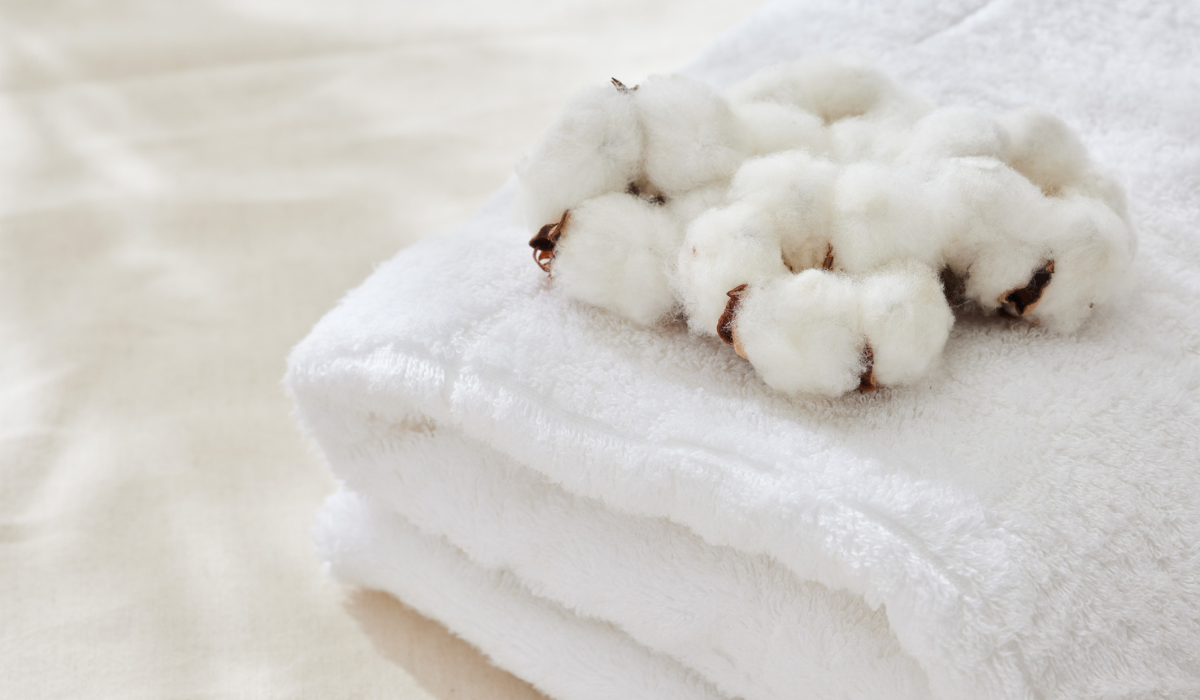
Best overall.
So, the short answer to “what is the best material for bath towels” is… cotton.
Cotton is a hydroscopic fiber, which makes it naturally super absorbent. It’s also durable, able to hold its shape over time and repeated washes. This also makes it easy to care for, as long as you don’t blast the heat on high in the washer or dryer. They’re also less likely to trap moisture and mold with proper laundering, as they generally dry pretty fast.
Since it is a natural textile, it’s gentle on skin, so it isn’t likely to cause any allergic reactions. This also makes it a great candidate for softness, with many different types of cotton towels providing the very softest, coziest towels available on the market.
But not all cotton towels are made alike. So let’s take a closer look at what kind of cotton may be the best one to look for in your search for bath towels.
100% Cotton
Best for sensitive skin.
You’ll see many “cotton blends” out there, and you’ll find the “blend” stands for a blend of good and bad. They often contain part cotton, part synthetic fibers like polyester, which dramatically reduces absorbency, softness, and drying power.
100% cotton is the gold standard when it comes to bath towels. If they’re 100% cotton, they will proudly advertise it in the product description. Make sure that, no matter what kind of cotton, cotton is the only fabric used in your towels.
Egyptian Cotton
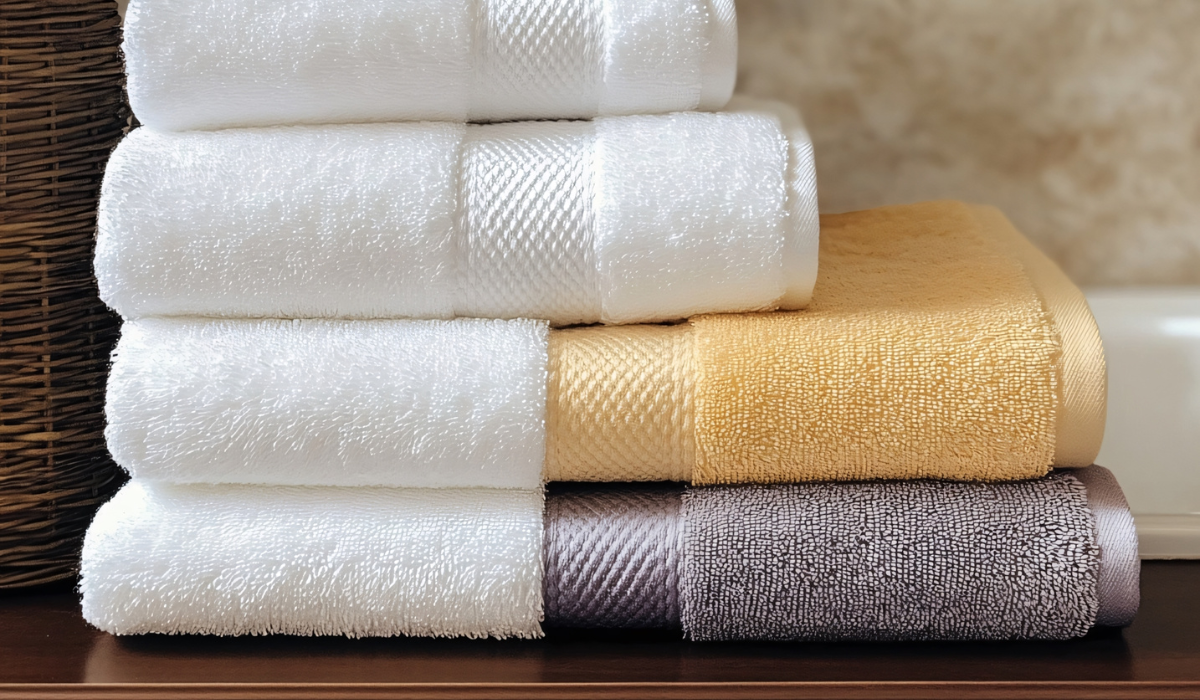
Best for moisture absorption.
Do you guys remember that “Sheets of Egyptian Cotton” song from Uptown Girls? That guy was onto something.
Egyptian cotton is made from the longest, finest cotton fibers available. The threads in this particular type of cotton are thick, fluffy, and insanely absorbent, making Egyptian cotton the top choice for the most luxurious spa bath robes and sheets in the world.
Egyptian cotton is the perfect balance of cuddly softness, warmth, and moisture absorption. Unfortunately, it does hold onto this moisture, so you’ll have to throw it in the dryer or hang dry it for a while before it gets completely dry.
Turkish Cotton
Best lightweight towels.
Keeping up with the song mentions, this fabric reminds me of Sharpay Evans’ solo where she mentions “towels imported from Turkey” (and Turkey imported from Ma-i-a-i-aineee). If it’s so famous that it made it into High School Musical 3, you know it’s gotta be good.
Turkish cotton has slightly shorter fibers than Egyptian cotton, but longer fibers than other cotton varietals like pima, making it a good combination of soft and strong. This means that it’s lighter weight but is also slightly less absorbent than Egyptian cotton.
While it’s not as absorbent as Egyptian cotton, it’s able to dry much faster. This means less time in the dryer and a shorter window for building up bacteria and growing mold.
Combed Cotton
Best for durability/strength.
This is more about the treatment of the cotton than the quality of the cotton itself, but you’ll also want to be looking for combed cotton.
The process of combing cotton removes impurities and shorter fibers, making for a softer, more absorbent fabric than regular cotton. The combing process also makes the fibers stronger and more durable, so you can use and resume your combed cotton bath towels for years to come, without worrying about them breaking down over time.
Bamboo/Rayon
Best for softness.
If “soft” is at the top of your priority list, you’ll need to look into bamboo (rayon) towels.
Most baby towels are made from bamboo, as it’s another natural fiber that’s absorbent and soft on even the most sensitive skin. If you’ve ever felt bamboo sheets, you know how silky-smooth and luxurious bamboo fabric feels, making for an elevated bathing experience.
An added benefit of bamboo is that it’s naturally breathable and antibacterial, making it the best fabric for folks with sensitive skin prone to irritation and breakouts. Bamboo towels are also machine washable and dryable, so they get a “check” in the “easy care” box.
As an added bonus, the process of making fabric from bamboo is super sustainable, making it the most eco-conscious choice for bath towels on this list.
Microfiber
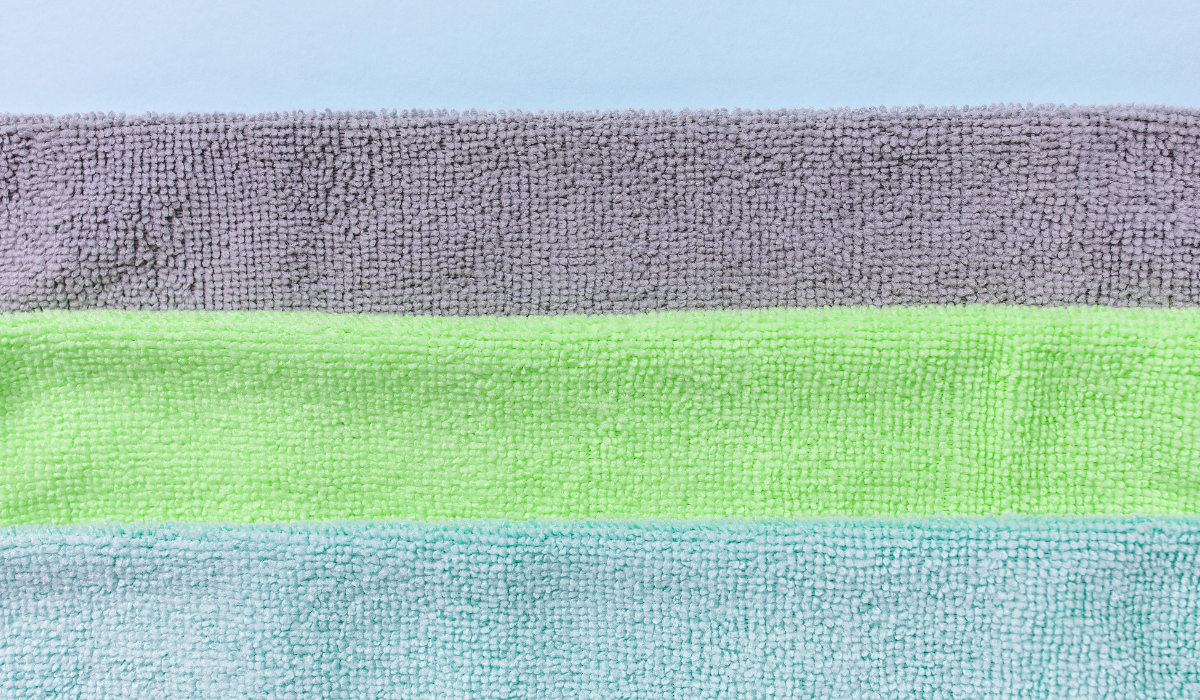
Best fast-drying/water absorption.
Now, as far as something scientifically engineered to absorb moisture fast and dry crazy quick, microfiber is unmatched.
The superior ability to wick away and trap moisture is kind of their whole deal, and their fast-drying properties make them great at keeping away bacteria and preventing the growth of mold and mildew. They’re also super thin and lightweight, making them great to bring on trips when you have limited space but need to bring a bath towel.
Microfiber towels also offer a generally cheaper option for folks on a tighter budget, plus they need even less care when it comes to laundering when compared to natural fibers. Unfortunately, the polymers used in microfiber could cause irritation for some folks.
Other Factors to Consider
Aside from the raw material your bath towels are made from, it’s worth it to think about other qualities a good bath towel should have, including:
Weave
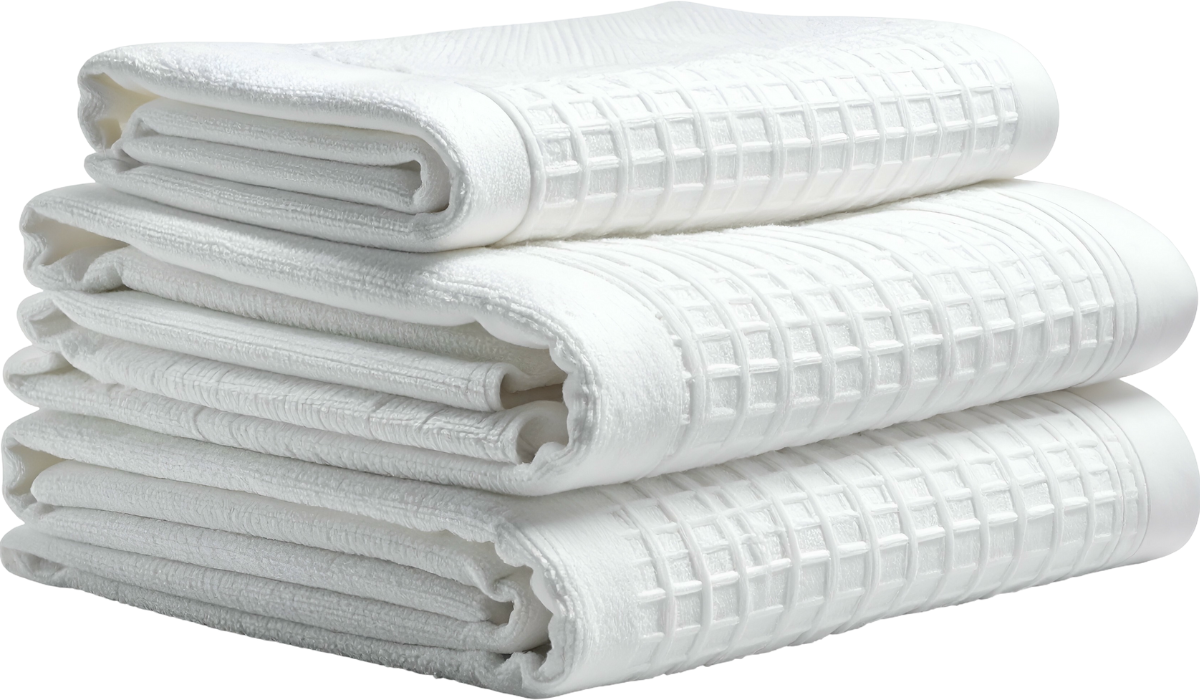
First and foremost, you’ll want to consider the weave. You can have the highest quality Turkish cotton bath towel, but if the weave sucks, it will fall apart and become useless within weeks.
Some of the most popular (and effective) weaves for bath towels include:
- Terry Cloth- The signature “loopy” material most towels are made out of, with absorbent loops made to pull moisture away from the body.
- Waffle Weave- My personal favorite, this type of weave features a uniform grid of boxes that act as little “thirst pockets” to absorb moisture. This design makes it quicker when drying, perfect for humid environments.
- Zero Twist- Similar to the loops in Terry cloth, the zero twist design features high-quality cotton fibers that don’t need to be twisted prior to being formed into loops for a more plush, absorbent texture.
- Jacquard- This is what the towels with the sort of embossed-looking designs woven in are made from. Pretty absorbent and adds some visual interest.
GSM (Grams per Square Meter)
Next up is the weight of the fabric, measured in grams per square meter.
If we’re looking at cotton towels, here’s what each GSM is best for:
- 300-400 GSM- Lower end, less expensive, coarser.
- 400 to 600 GSM- Medium-high end, a bit pricier and better at absorption, soft, ideal weight for high-quality bath towels that still dry fast.
- 700-900 GSM- Highest weight, crazy luxurious, plush feel, used at high-end hotels, not the quickest drying.
If the GSM is too low, you’re dealing with a coarse, thin towel. If it’s too high, you’re looking at a soggy towel that will feel damp until you throw it in the dryer. 400-600 GSM is the sweet spot for bath towels.
Size
If you’ve ever had only the hand towel left to dry yourself off with, you know how important size is when it comes to bath towels. But we all know how seemingly subjective the size of a “body towel” can be.
Bath towels, good for daily use, are usually 27 inches by 54 inches. But the ones that get it know that there’s an even better option. Bath sheets are available and they usually measure 40 inches by 72 inches.
What About Smell?
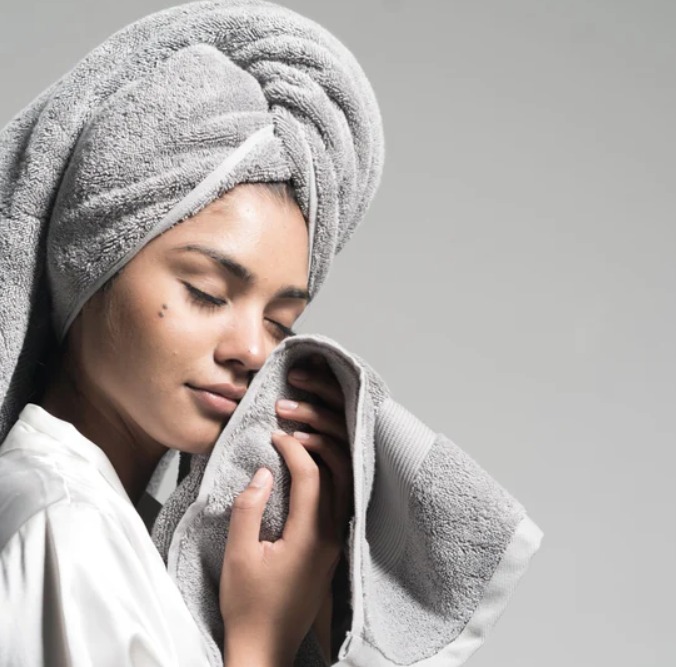
Unfortunately, there’s only so much natural fibers can do to mitigate smell. For that, you’ll have to look into silver-infused cotton, like Miracle Brand towels.
Silver is a naturally antimicrobial and antibacterial material that’s able to fight off bacteria exceptionally well. In fact, silver-infused fabric prevents up to 99.7% of odor-causing bacteria growth, making it a no-brainer for folks nervous about stinky towels.
They also maintain freshness longer, allowing you to go three times as long in between washes.
So, What’s the Best Bath Towel Material?
In general, it’s safe to say that combed, 100% Egyptian or Turkish cotton is the best material for use in bath towels. Due to being absorbent, soft, natural, and (variable) quick-drying, natural fiber cotton provides everything you could want in a bath towel: a fast drying, soft, smell-free experience.
If you want something different, try super-soft bamboo or rayon, or microfiber for superior absorption and unmatched fast-drying. And look into silver-infused cotton for added bacteria and smell management.