You scrub the shower door, wipe the mirror, and swish the toilet, and by Sunday afternoon it looks like you never touched it. I used to attack every surface the moment I sprayed it, scrubbing until my arm ached because nobody told me cleaners need time to work before you wipe. Once I learned to let the spray sit, half the scrubbing disappeared on its own.
That’s what these 17 bathroom cleaning hacks fix. You’ll get a vinegar spray that clears glass shower door film in 15 to 30 minutes, a vinegar wrap that melts hard water off faucets overnight, and a bagged vinegar soak that unclogs a showerhead while you sleep. Every fix tells you exactly how long to let it sit.
Glass and Hard Water
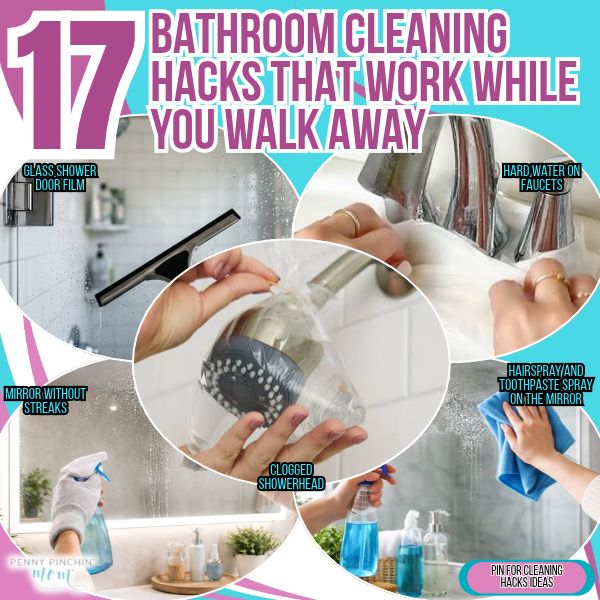
1. Glass Shower Door Film
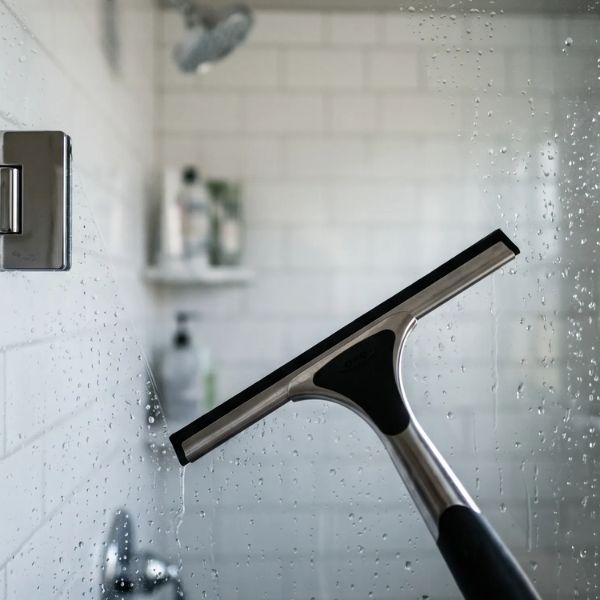
Most shower cleaning hacks fail on cloudy glass because people wipe too soon. That film is soap scum sitting on top of mineral deposits, and no amount of elbow grease fixes it faster than letting a cleaner sit does. Mix equal parts white vinegar and warm water in a spray bottle, then add a good squirt of dish soap and shake gently. Coat the glass from the top down and walk away for 15 to 30 minutes.
Come back, work it over with a non-scratch scrub sponge, rinse, and squeegee dry. Call it 10 minutes of real work.
A gallon of white vinegar runs $4 at Walmart, and this uses pennies of it, which puts it well under the $6 a bottle that specialty glass shower spray costs. Prices shift by region, so yours may land a little higher or lower. Skip it entirely on marble or travertine surrounds.
2. Hard Water on Faucets
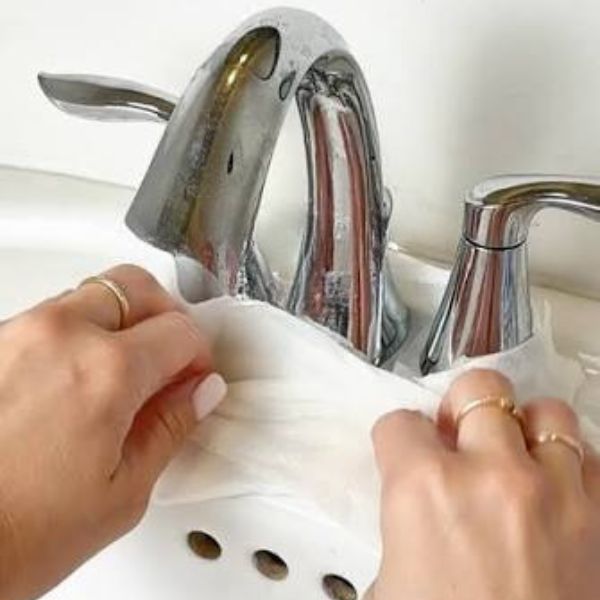
A paper towel soaked in straight white vinegar and wrapped around the base of a faucet does what spraying never will, because it holds the vinegar against the crust long enough to dissolve it. Tear off two or three sheets, saturate them, and mold them around the spout, the base, and the handles. A rubber band holds them in place on skinny fixtures.
Give it 30 to 60 minutes. Unwrap, scrub the loosened scale with an old toothbrush, and rinse with a wet cloth. Five minutes of hands-on time, and the $6 lime and calcium remover at Walmart stays on the shelf.
Vinegar can dull oil-rubbed bronze and unlacquered brass, so those finishes get a test spot first.
3. Clogged Showerhead
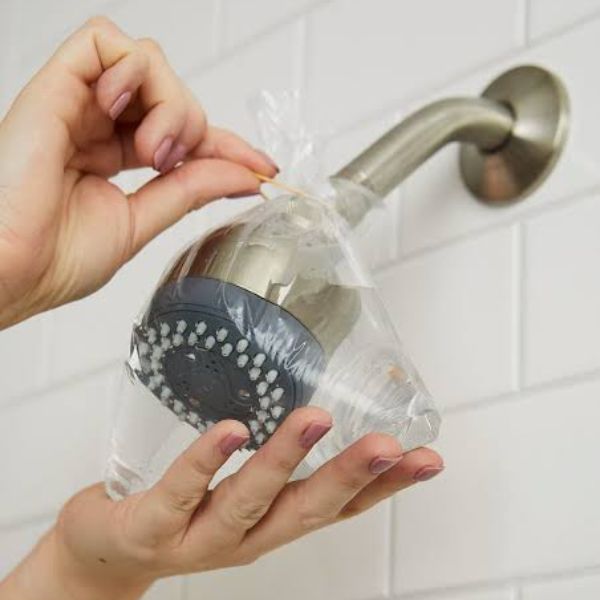
Weak, sideways spray almost always means mineral buildup in the nozzles, not a plumbing problem. Pour 2 to 3 cups of white vinegar into a quart freezer bag, slip it up over the showerhead so the face is submerged, and secure it with a rubber band or twist tie.
Leave it overnight, roughly 8 hours. In the morning, pull the bag off, rub the nozzle holes with your thumb, and run hot water for a minute to flush the grit out.
Five minutes of actual work.
Back when three kids were sharing one shower, I replaced a showerhead I didn’t need to replace. A $4 jug of vinegar would have covered it. Limit the soak to 30 minutes on nickel or bronze finishes.
4. Mirror Without Streaks
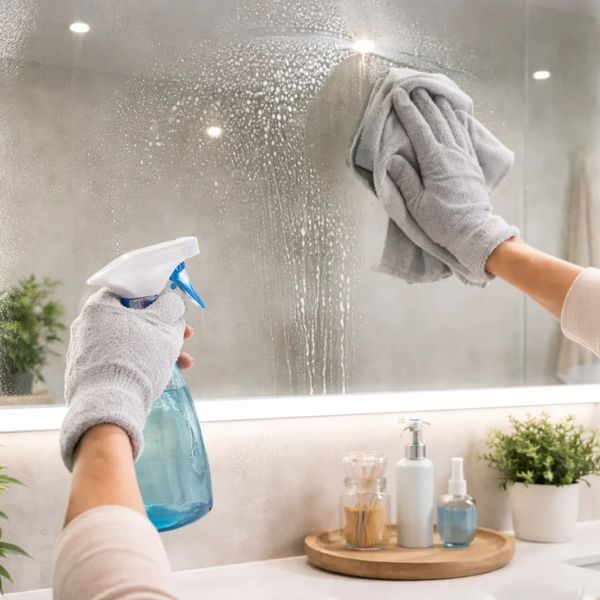
Streak-free glass takes two minutes and no blue spray. Mix equal parts 70% rubbing alcohol and water in a spray bottle. A 32-ounce bottle of alcohol comes in under $3 at Walmart and will outlast the spray bottle.
Spray the cloth, not the mirror, then wipe in one direction and buff dry with a second cloth. No wait needed here. Alcohol flashes off fast, which is exactly why it doesn’t streak.
Flat-weave microfiber cloths cost $10 for a pack of 8 at Target and beat paper towels, which leave lint behind. Never spray liquid directly at the mirror’s edges. It wicks behind the glass and ruins the silver backing, and that damage doesn’t come out.
5. Hairspray and Toothpaste Spray on the Mirror
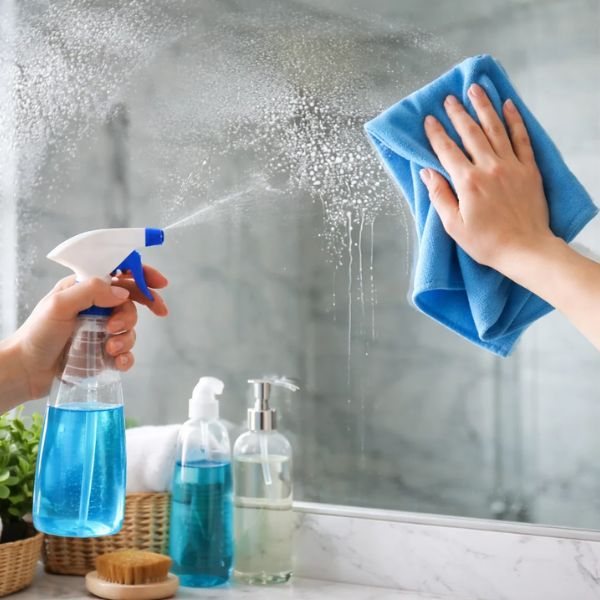
Alcohol alone smears hairspray around instead of lifting it, because hairspray is a resin and toothpaste splatter dries hard. Wet a cloth with warm water and two drops of dish soap, lay it flat over the worst spots, and give it 1 to 2 minutes to soften. Wipe the softened residue away, then follow with the alcohol and water mix from the previous fix and buff dry.
Five minutes from start to finish, and the $4 bottle of Dawn already sitting at the sink is the entire supply list. When the grandkids brush their teeth at my house, the mirror tells on them every time, and the two-step beats scraping with a fingernail.
6. The Sink Faucet Aerator
Water that sprays off to one side or trickles when the pressure used to be fine is a clogged aerator, not a failing faucet. Unscrew the little screen at the tip of the spout by hand, or grip it with pliers padded with a washcloth so you don’t mar the finish.
Drop the parts in a small bowl of white vinegar and let them soak for 30 minutes, or overnight if the buildup is heavy. Poke the screen holes clear with a pin, rinse, and reassemble in the same order you took them apart.
Ten minutes of work, and the only thing it costs is vinegar you already own. A replacement aerator runs $6 to $8 at the hardware store.
Grout and Tile
7. Grout Without Kneeling
For years I cleaned grout on tile floors the hard way, on my knees with an old toothbrush and a sore back the next morning. Oxygen bleach does that work instead.
You need oxygen bleach powder (an OxiClean-style tub costs $10 to $13 at Walmart or Target, and one tub lasts many cleanings), warm water, an open bucket, a sponge mop, and a long-handled grout brush, $10 to $15 at Walmart or Amazon.
Mix one scoop into warm water in an open bucket. Mop it over the grout lines until they’re soaked and leave it for 10 to 15 minutes. Then work the long-handled brush down each line and rinse with clean water. Figure 15 minutes of real scrubbing, and compare that to a $6 to $9 can of foaming grout spray that never gets down into the line anyway.
Never cap or store the leftover solution. Oxygen bleach releases gas as it works, so mix only what you’ll use and pour the rest down the drain.
8. Shower Grout That Keeps Its Clean
Wall grout is harder than floor grout for one reason: the cleaner slides off before it can do anything. Fix that by making the mix thicker.
Use the same oxygen bleach powder from the floor job, but add just enough warm water to make a loose paste. Spread it on the grout lines with a small handheld grout brush, $5 to $8 at Walmart. Start at the top of the wall and work down, so dirty runoff never crosses tile you already cleaned.
Let it sit 10 to 15 minutes, misting it with plain water from a spray bottle if it starts drying out, because dried powder won’t lift anything. Scrub the lines, then rinse top to bottom. That’s 10 to 15 minutes of work on a standard tub surround, and because the paste stays in the line instead of running off it, you’re doing this monthly instead of chasing mildew every week with a $5 to $8 bottle of spray.
9. Mildew on the Caulk Line
Those black speckles along the caulk where the tub meets the tile aren’t dirt. They’re mildew, and scrubbing just polishes them.
Grab chlorine bleach (a gallon runs $3 to $4 at Walmart and you’ll use a few tablespoons), paper towels, and gloves. Turn on the exhaust fan or crack the window before you start. Tear paper towels into strips, dampen them with bleach, and press them flat along the caulk line so they stay in contact. Thirty minutes is plenty.
Lift the strips, rinse the caulk well with water, and let the fan run another 15 minutes. Five minutes of handling, total.
Chlorine bleach is not the same product as the oxygen bleach in items 7 and 8. Never use it in the same session as vinegar or any ammonia-based cleaner. If the caulk stays gray and soft after two tries, the mildew is underneath, and the caulk needs replacing.
10. The Grout the Mop Never Touches
A floor can look dingy again just minutes after you clean it, and the culprit is usually the few inches of grout along the baseboard and around the toilet base, where a sponge mop simply cannot reach.
Save a cup of the oxygen bleach solution from item 7 before you dump it. Dip an old toothbrush, which costs nothing, or a detail brush at $4 from the Walmart cleaning aisle. Paint the solution onto the perimeter grout, the corners, and the seam where tile meets the baseboard. Ten minutes of sitting, then scrub and wipe with a damp cloth so the loosened grime leaves the room instead of settling back into the lines.
You’re down on your hands and knees for 10 minutes, but only along the edges.
11. The Cloudy Film on Tile Walls
Hard water gets blamed for the dull haze on tile above the tub, but a lot of it is plain soap residue sitting on the glaze and dulling the grout along with it. I let that haze sit for a year once, assuming the tile was simply old.
Fill a spray bottle ($1 at Dollar Tree) with warm water and a teaspoon of dish soap. I spend $4 on a big bottle of Dawn at Walmart, and this uses a splash. Mist the tile wall until it’s wet, top to bottom; wait 10 minutes, then wipe with a damp microfiber cloth and rinse. A six-pack of cloths costs $8 to $13 at Walmart or Target and beats paper towels for this.
Rinse the tub floor well afterward, because dish soap residue makes it slippery. Ten minutes of work, and a $4 to $6 bottle of daily shower spray never enters the cart.
12. Grout That’s Clean but Still Looks Dirty
Sometimes the grout is genuinely clean and still reads as stained, because old cement grout absorbs color and never fully gives it back. No amount of scrubbing changes that.
A grout colorant pen costs $10 to $20 at Walmart or Amazon, and one pen covers the grout on a small bathroom floor. Clean the grout first using item 7, then let it dry a full 24 hours. Shake the pen, press the tip into the line, and draw along it in one steady pass. Wipe any marks off the tile face right away with a damp cloth, before they set.
Budget 30 to 45 minutes for a small floor, then keep water off the grout for 24 hours while it cures.
Skip this on natural stone and on shower floors that stay wet. Against what a tile pro charges to regrout a bathroom, the pen is a rounding error.
13. Seal the Grout, So It Stays Done
Clean grout gets dirty fast because unsealed grout is porous. It drinks in soap, hair dye, and dirty mop water like a sponge, which is why the lines look gray again two weeks later.
Grout sealer comes in under $18 at Walmart or Lowe’s, usually in a bottle with a roller tip. Clean the grout, then let it dry for a full 24 hours. Roll the sealer down each line and wipe any that lands on the tile face immediately, or it dries to a cloudy smear. Coats go on 5 to 15 minutes apart, and nobody showers for 24 hours after the last one.
Run the fan while you work. The rolling itself takes 20 to 30 minutes. I do ours on a quiet Sunday when nobody needs the bathroom, and it buys a year or two of easier cleaning.
Tub and Sink
14. Tub Ring
The ring around the tub is soap film and body oil, not dirt, which is why a dry scrub never touches it. Stir a tablespoon of dish soap into a half cup of baking soda, adding warm water until it’s the texture of frosting. Smear it along the ring with your fingers or a non-scratch sponge, leave it for 10 minutes, then wipe and rinse. Five minutes of work plus rinsing.
Works on acrylic, fiberglass, and porcelain tubs. Skip steel wool or gritty powders on acrylic, because the scratches hold grime worse than the ring ever did.
A $4 bottle of Dawn and a $1 box of baking soda make batch after batch. Of all the bathtub cleaning hacks I’ve tried, this is the one I reach for most.
15. Slow or Smelly Sink Drain
When my kids were growing up and sharing one bathroom, I was ready to call a plumber over a sink that took four minutes to empty. A $4 plastic drain tool fixed it in about ninety seconds, and I’ve never been more horrified or more satisfied.
Grab a zip-style plastic drain-clearing tool, $3 to $6 at Walmart, Target, or any hardware store. Lift out the stopper, feed the barbed strip down, and pull up slowly. Have a paper towel ready. Follow with a half cup of baking soda and a solid minute of hot tap water for the smell.
Five minutes, no waiting, and no $6 bottle of chemical drain cleaner. A fully blocked pipe with standing water is still a plumber’s job.
16. Toothbrush Holder and Soap Dispenser Gunk
The crusty ring inside a toothbrush holder and the dried goo around a soap pump both come off in the dishwasher that’s already running. No scrubbing on this one.
Empty the holder and rinse out loose debris. Set it upside down on the top rack. For a pump-style dispenser, unscrew and remove the pump mechanism first, since the spring and tube don’t belong in there. Run a normal cycle. Two minutes of loading is the whole job.
Hand-painted ceramic, anything with metallic trim, and most resin holders should be washed by hand instead. The $5 bottle brush and specialty cleaner you’d otherwise buy to reach the bottom can stay at the store.
17. The Textured Tub Bottom That’s Gone Gray
If the non-slip bottom of your tub has turned dingy and a sponge just skates over it, the texture is holding soap residue down in the grooves. Fill the tub with two inches of hot water and stir in one scoop of oxygen bleach powder until it dissolves. Oxygen bleach such as OxiClean costs $10 to $13 for a tub at Walmart or Target and lasts many cleanings.
Let it soak 2 to 4 hours, or overnight if nobody needs the tub. Drain, then go over the texture with a stiff nylon brush. Ten minutes of work on your end.
Mix only what you’ll use and pour the rest out. Never combine oxygen bleach with chlorine bleach, and never cap leftover solution in a bottle, since it releases gas.
A Clean Bathroom That Actually Stays Clean
That Sunday afternoon slide back to grimy isn’t you falling behind. It just means you were scrubbing before the cleaner had time to work. Once you let the spray sit instead of fighting it with your arm, the bathroom stays done longer than a day.
Pick one tonight. If hard water has killed your water pressure, bag the showerhead before bed and let Clogged Showerhead run while you sleep. The Hard Water on Faucets wrap pays off in under an hour. Mildew on the Caulk Line is the one to run when that dark line has bothered you for weeks. Keep the rest as a bathroom cleaning checklist and work through it a job at a time. The same rule covers toilet cleaning, by the way. Spray it, walk out, come back in ten minutes, and the ring gives up without an argument.