That carpet kept receipts all season. Salt rings by the door, mud from the driveway, and a wine splash from the one holiday toast that went sideways.
The first winter I owned carpet, I went after a salt ring by the front door with hot water and a scrub brush. Twenty minutes of rubbing later, the ring was twice as wide, soaked down into the padding, and still just as white. I had to let the whole thing dry for two days before I could start over and do it the right way.
Carpet cleaning works best when you match the method to the mess, so these carpet cleaning hacks are sorted by stain type, starting with Blot, Don’t Rub, the one rule that saves every other fix. Salt Stains From Winter Boots calls for vinegar instead of force, and Mud Tracked In From the Driveway wants patience more than scrubbing. Find your spill below and follow its steps.

Before the Stain Sets, and Winter’s Worst Offenders
1. Blot, Don’t Rub
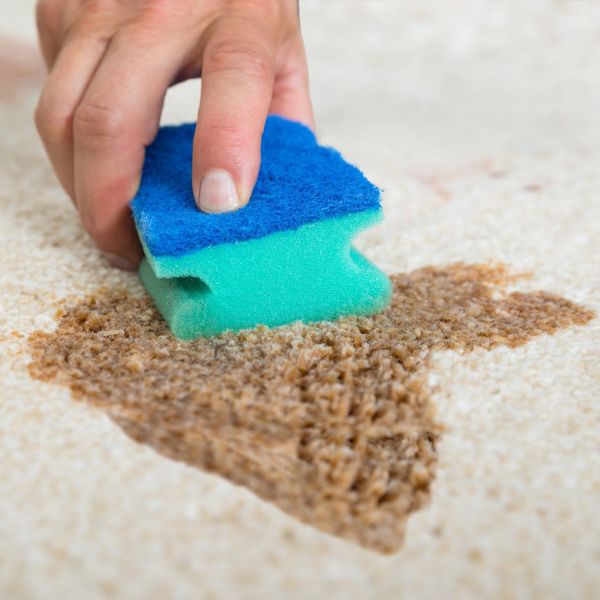
Rubbing is what turns a quarter-sized spill into a dinner-plate stain. Pressure drives the liquid down into the backing and padding, where no amount of surface cleaning reaches it, and it frays the carpet fibers so the spot looks dull even after the color is gone.
Press a clean white cloth or a folded stack of paper towels straight down on the spill. Lift, move to a dry section of cloth, and press again. Always work from the outside edge in toward the center so you aren’t pushing the stain wider.
Nothing to wait on, and it takes under a minute per spot. White cloths matter because dyed towels can transfer color onto wet carpet. Paper towels are $4 a roll at Walmart, or use the rag pile you already have.
2. Test in a Hidden Spot First
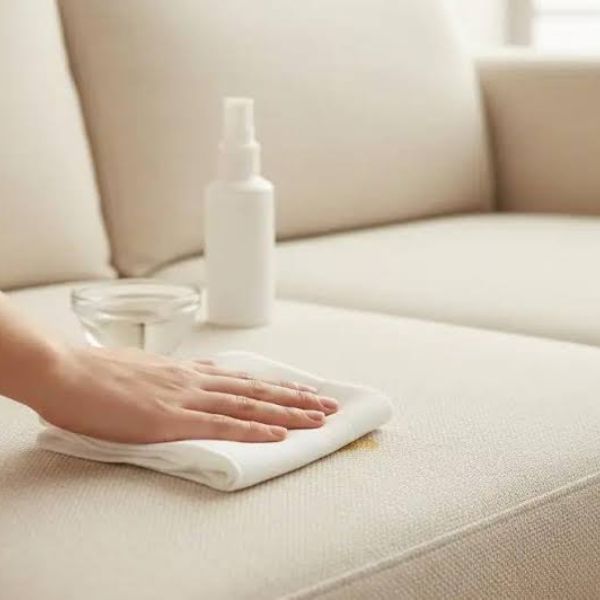
Before any carpet cleaning solution touches a stain you can see, try it somewhere you can’t. Inside a closet, under the sofa, behind a door. This is colorfastness testing, and it costs you five minutes and a clean white rag, three to a pack for $1.25 at Dollar Tree.
Dab a little of the solution on with the cloth. Give it 5 to 10 minutes, then blot and look at the cloth. Color on the cloth means the carpet dye is lifting, and that solution is off the table for that carpet.
Do this every single time, even with something as mild as diluted vinegar. Carpets from different decades and different fiber blends behave differently.
Want a DIY carpet cleaning solution mixed and waiting? Our Homemade Carpet Cleaner recipe beats guessing at ratios.
3. Salt Stains From Winter Boots
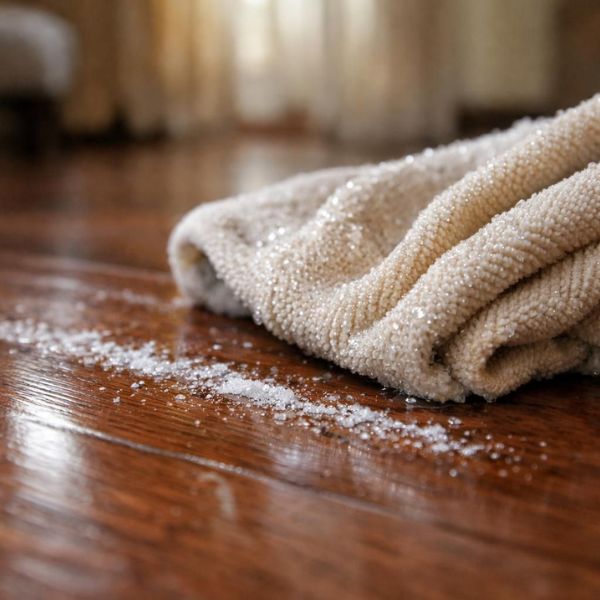
Those chalky white rings along the entryway are salt residue, and plain water alone tends to spread them. Warm water mixed with white vinegar in roughly equal parts breaks the salt down so you can lift it out.
Blot the mixture onto the ring with a white cloth, working from the outside in. Wait five minutes. Blot again, go over the spot with plain warm water to rinse, and blot dry with a towel. Active time is about 15 minutes, with a few hours of drying after.
White vinegar is $3 for 32 ounces at Walmart, a third of what a bottled spot remover costs. Skip it on wool rugs until you’ve read the care label, because rug cleaning rules change with the fiber.
4. Mud Tracked In From the Driveway
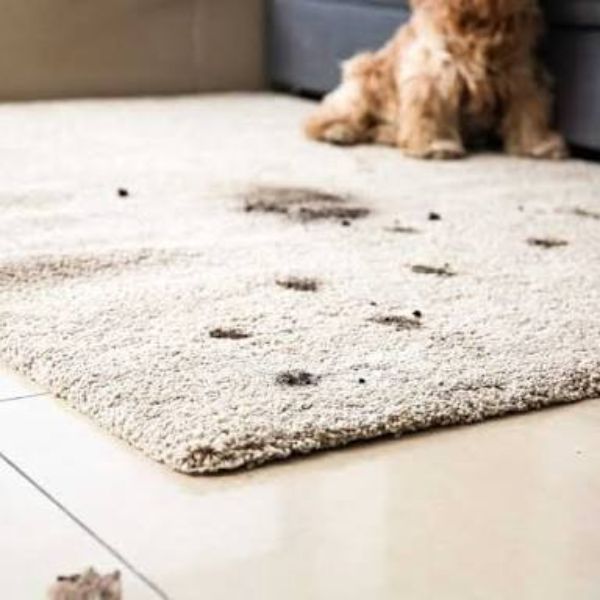
The instinct is to grab a wet cloth immediately. Don’t. Wet mud smears into a wide brown shadow, while dry mud flakes out of the fibers almost entirely.
Let the spot dry completely, which means several hours or overnight. Then vacuum it up, going over the area from two directions. Treat any remaining shadow with a teaspoon of dish soap in two cups of warm water, blotted on, left for five minutes, then rinsed with plain water and blotted dry.
Once the mud is dry, active time is only about 5 to 10 minutes. A bottle of Dawn comes in under $4 at Target and handles a winter’s worth of spots.
After one Saturday soccer game, my grandson’s cleats left a trail from the front door to the kitchen, and waiting until Sunday morning saved me the whole scrubbing job. For the mud that ends up in the car instead, see 17 Car Cleaning Hacks for a Winter of Snacks, Salt, and Wet Boots.
5. Vacuum the Grit Out Before Anything Gets Wet
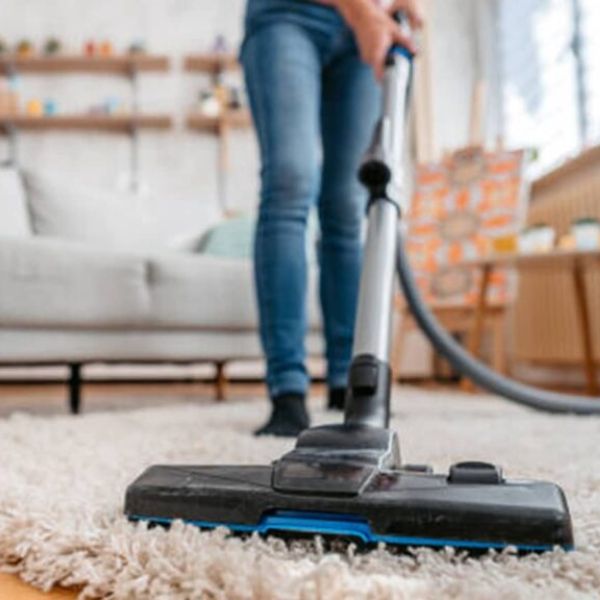
Salt crystals, sand, and dried mud flecks sitting in a traffic lane turn into mud paste the second you add a cleaning solution. That’s how a small spot becomes a two-foot gray smear.
Vacuum the area slowly before you treat it, several passes in different directions, using the crevice tool along the baseboards and in the doorway where grit collects worst. Give it a full two or three minutes, not one quick swipe.
If the grit feels ground in, work it loose first with a stiff brush, $1.25 at Dollar Tree, then vacuum again. Anything you lift out dry is something you never have to blot out wet, and this is the step most people skip when cleaning carpets in winter.
6. The Weighted Blotting Pad for Soaked-In Spots
When a spill has gone past the surface and into the padding, hand blotting only gets the top layer. The liquid underneath wicks back up a day later and the stain reappears, which is why so many spots look fixed on Monday and terrible by Wednesday.
Fold a thick stack of paper towels or a clean white bath towel over the wet spot. Set something heavy on top, a stack of books or a cast iron pan on a plate. Weigh it down for 15 to 20 minutes while the towels pull the moisture up. Swap in dry towels and repeat once.
Total active time is about 5 minutes, spread over half an hour. Nothing new to buy, though a 12-pack of white terry bar towels is $8 at Walmart and mine lives in a cleaning bucket all winter.
7. Ice Melt Pellets Ground Into the Entry Carpet
Those blue and green pellets are dyed, and once they dissolve into damp carpet, they leave a tint that’s much harder to pull out than plain salt residue.
Get them up dry and whole. Sweep the loose ones onto a dustpan with a stiff brush, then vacuum the area thoroughly. Don’t add water until every pellet is gone, because wetting them is what sets the dye.
Three minutes, start to finish.
If a pellet has already dissolved and left a faint blue cast, treat it like a salt stain with the warm water and vinegar method, blotting rather than scrubbing. A washable entry runner, $15 at Walmart, keeps most of them off the carpet in the first place.
8. Dry the Spot All the Way Down
Half the winter stains that come back were never really gone, just damp. Moisture left in the backing pulls dissolved salt and soil back up to the surface as it evaporates, and you get a ring around the spot you just cleaned.
Blot with dry towels until a fresh towel comes up barely damp. Then aim a box fan at the area, or point a floor vent in its direction, and let it run several hours. Check the next morning by pressing a dry paper towel into the fibers.
When my kids were little, I’d blot once, declare victory, and wonder why a pale ring showed up a week later.
A box fan is $20 at Walmart and does double duty in July. Your part takes five minutes. The fan handles the rest.
Holiday Spills, From the Toast to the Candles
9. Red Wine
A tipped glass at midnight is practically a New Year’s tradition. Blot up everything you can with a clean white cloth, working from the outside edge toward the center, then blot again with cold water to dilute what’s left.
On light-colored carpet only, stir a teaspoon of dish soap into a tablespoon of 3% hydrogen peroxide and two cups of warm water. Dab it on, give it five minutes, blot, then rinse with plain water and blot dry. About 15 minutes of work.
Sixteen ounces of hydrogen peroxide is $1.50 to $2 at Walmart, and dish soap runs $3 to $4 a bottle, against $6 to $10 for a wine remover that handles exactly one stain.
Peroxide lightens dark carpet. Test a hidden spot first, and never mix it with vinegar in one container.
10. Grease and Butter
When butter slides off the roll basket, or someone sets a greasy plate on the floor, resist the urge to grab a wet cloth. Water spreads oil through the fibers.
Scrape off whatever is solid. Then pour cornstarch or baking soda over the spot until the grease is buried under a white mound, walk away for 15 to 30 minutes while the powder pulls the oil up out of the fibers, and vacuum it all off. A teaspoon of dish soap in two cups of warm water, blotted on and rinsed, takes care of the shadow that’s left.
Most of that half hour is waiting. Cornstarch is $2.50 for a 16-ounce box, baking soda is under $1, and both are probably in your kitchen already. The grease-cutting carpet spray does the same job for $5 to $8.
11. Hot Chocolate and Coffee
Coffee leaves a tannin stain that darkens as it dries, and hot chocolate adds milk fat and sugar on top of it. Blot first with a dry cloth, then with cold water, never warm.
Mix a tablespoon of white vinegar, a teaspoon of dish soap, and two cups of cool water. Work it in from the outside in, let it sit three to five minutes, blot, then rinse with plain water. Blot dry with a towel and press down hard to pull moisture out of the padding.
About 15 minutes of work, a few hours to dry fully. At $3 for 32 ounces of Walmart white vinegar, the best carpet cleaning solution for coffee costs pennies per stain.
12. Gravy and Food Spills
The year someone bumped my elbow at a crowded Thanksgiving table, half a plate went straight down onto the carpet, and the fix was less dramatic than the moment.
Lift the solids with a spoon, scraping toward the center so you don’t widen the mess. Blot with cold water, then dab with warm water with a few drops of dish soap. Wait five to 10 minutes, blot again, rinse, and press a dry towel down to lift the moisture.
If a greasy shadow remains, go back with cornstarch as in the grease method. Figure 15 to 20 minutes and the $3 to $4 your dish soap costs. Skip hot water, which sets the protein in meat drippings.
13. Eggnog and Dairy Spills
Dairy brings a second problem along with the stain. Milk that dries in carpet fibers sours, and a week later you’ll smell it before you see it.
Blot up the liquid, then treat with cold water and a teaspoon of dish soap in two cups of water. Give it about five minutes, blot, and rinse. If any odor lingers after it dries, mist lightly with a half-and-half mix of white vinegar and water, then blot again.
Roughly 15 minutes of work. Everything here costs under $4 total, and most of it is already under your sink. Avoid hot water and steam on fresh dairy, because heat cooks the protein right into the fibers.
14. Candle Wax
A warm iron and a brown paper sack sound like a recipe for a worse mess, but this is the method that actually lifts wax out of carpet.
Hold an ice cube in a sandwich bag against the wax for three to five minutes until it’s hard and brittle. Chip it off with a dull butter knife, pulling toward the center. Lay a piece of paper grocery bag over what’s left, set an iron to low with no steam, and press for a few seconds at a time, lifting often and sliding to a clean section of bag as wax transfers.
About 20 minutes, sometimes two rounds. No cost. If dye remains, dab with rubbing alcohol, $2 for 16 ounces. Keep the iron on low, since high heat melts synthetic fibers.
15. Glitter
Five minutes and a roll of tape handle the craft project that keeps showing up through February. Do not vacuum first. The beater bar scatters glitter across the room and buries it deeper in the pile.
Press packing tape sticky side down over the spot, lift straight up, and repeat with fresh tape until it stops picking anything up. A lint roller works the same way and covers more ground, $3 to $5 at Target or Walmart. Then vacuum slowly with the hose attachment.
No waiting, under five minutes for a small area, and the tape is $3 a roll if you don’t already have four of them in a drawer in December.
16. The Spill You Found in January
Every year when the tree comes down, there’s often a stain behind the skirt, dried and dark and definitely not new. Set-in carpet stains are not a lost cause; they just need rehydrating first.
Mist the spot with warm water until it’s damp all the way through, using a spray bottle (about $1 at Dollar Tree). Let it soften five to 10 minutes, then treat it with the method matching the original spill: peroxide for wine, cornstarch for grease, dish soap for food.
Expect two or three rounds, drying completely between each. Cleaning carpet stains this old is slow by nature, which is different from a method that failed. If the third round still shows a shadow, it’s time to consider a rental machine.
Kid and Pet Messes
17. Pet Urine
Blot first, and blot longer than feels necessary. Press a thick stack of paper towels or an old white towel into the spot with your full weight, lift, replace, repeat until nothing more comes up. Then saturate the area with an enzyme cleaner. Rocco & Roxie Stain & Odor Eliminator is $13 for a 32 oz bottle at Walmart, and it’s the one product on this whole list worth buying new, because enzymes break down the uric acid that plain soap just dilutes.
Follow the label on timing, usually 5 to 10 minutes or until it air dries. Your part is about 10 minutes.
Years ago we cleaned up after our family dog with an ammonia-based spray, and he went right back to that same corner for weeks. Ammonia reads as urine to a pet. Skip it entirely, and skip heat on fresh urine too, since hot water sets protein stains.
18. The Pet Accident You Can Smell But Can’t See
Nose says yes, eyes say nothing. A small UV blacklight flashlight, $10 on Amazon, finds dried urine that’s invisible in daylight. Wait until dark, turn off the lamps, and sweep the beam low across the carpet. Old spots glow a dull yellow-green.
Mark each one with a scrap of painter’s tape, $4 a roll at Walmart, so you can find them with the lights back on. Mist with warm water to rehydrate the dried residue, wait 5 minutes, then treat with the same enzyme cleaner from item 17 and give it the time the label asks for.
Plan on 20 minutes of work and several hours of drying. Don’t reach for hydrogen peroxide on these, especially on darker carpet, where it can lighten the fibers permanently.
Your Carpet Can Handle This Season
That carpet is going to keep collecting evidence all winter. Salt rings, muddy boot prints, the eggnog that didn’t quite make it to someone’s cup.
None of it means the carpet is ruined. It means reaching for the vinegar or the cornstarch or the enzyme cleaner instead of standing over the spot with a wet rag, working it in deeper, which is what I did for years before I knew better. Keep a few white rags, a spray bottle, and a bottle of vinegar in the hall closet by the door. Most of this stops being a project at all once the supplies are three steps from the mess.