Six weeks of hosting and decorating leave the house looking like the holidays never left, pine needles ground into the rug and glitter in places you swear you never used glitter. I once left our tree up so long it went bone dry and started dropping needles with every step, a fire hazard I don’t want to repeat. The bins didn’t come down from the attic until the second week of February that year.
This deep cleaning checklist starts at the front door and works through the pine needles hiding in every corner. It ends with a plan for storing decorations so next December starts easier than this one did. Take the deep cleaning tips in order, or jump straight to whatever room is bothering you most.

Entry and Living Room
1. The Front Door and Porch
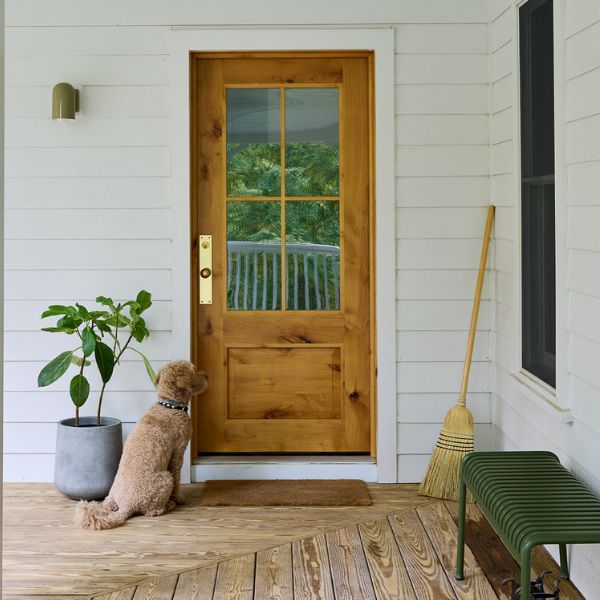
That wreath has been hanging since the day after Thanksgiving, and it is officially done. Pull it down, shake it out over the porch rail, and bag it for storage before you clean anything else.
What you need: a broom, a dustpan, and a bucket of warm water or a hose if the salt has crusted on the concrete.
Sweep the porch, the steps, and the threshold, then rinse the salt rings and scrub stubborn spots with the broom. Wipe the door handle and doorbell while you’re there. No purchase needed for any of this, though if your porch broom lost its bristles sometime during Advent, a stiff push broom runs about $15 to $20 at Walmart.
Time estimate: roughly 10 to 15 minutes, give or take based on how icy your winter has been.
2. Entry Floors
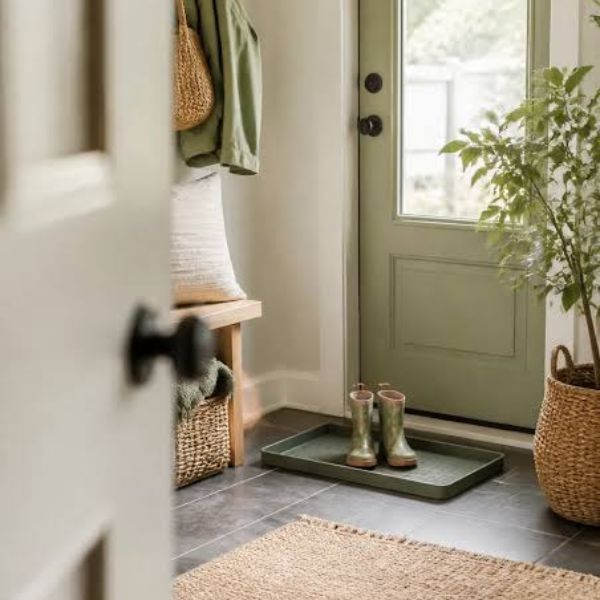
Six weeks of boots in and out leaves white salt haze on hard floors and chalky rings in the entry rug. Hit this early in your deep cleaning house checklist, because everything you track through the rest of the house starts here.
What you need: broom or dust mop, vacuum, a spray bottle of warm water mixed half and half with white vinegar.
Sweep first, then vacuum the rug in two directions, then damp-mop the hard floor with the vinegar mix. A gallon of white vinegar costs around $4 at Walmart and outlasts a $10 bottle of salt-remover spray several times over. Never mix it with bleach or ammonia cleaners.
For set-in salt stains and mud in carpet fibers, use the methods in 18 Carpet Cleaning Tricks for Salt, Mud, and Holiday Spills rather than scrubbing blind.
Time estimate: about 10 to 15 minutes for the sweep and vacuum pass, longer if you’re treating stains.
3. The Coat Closet Reset
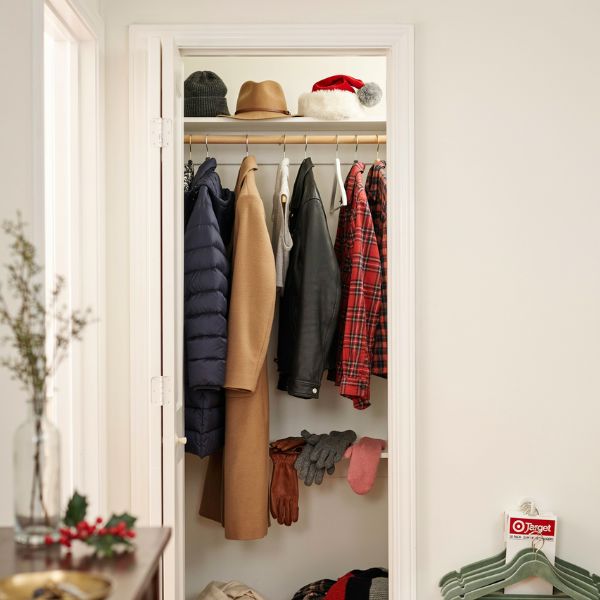
Guest coats, mismatched gloves, three hats that belong to nobody, and a scarf that has been on the floor since the first party. The holidays turn this closet into a pile, and January is the month you finally sort it out.
What you need: two bags, one for donation and one for trash, and a flat surface to sort on.
Empty it completely, match gloves into pairs, try coats on anyone still living in the house, and donate what nobody reached for all season. Then put back only what fits and what you’ll actually wear.
This step costs nothing unless you want matching hangers, around $20 for a 30-pack of slim velvet ones at Target. For the actual system that keeps it from repiling, follow 19 Coat Closet Ideas for the Winter Pile-Up by the Front Door.
Time estimate: about 20 to 30 minutes.
4. Take Down and Store Decorations So They’re Ready Next Year

Next December is easy or miserable depending on this one afternoon. Wrap ornaments individually in tissue or paper towels, wind each strand of lights around a piece of cardboard or a cord reel instead of dumping them loose, and sort by type as you go.
What you need: 3 to 4 labeled plastic bins, tissue paper or paper towels, and cardboard pieces or cord reels for the lights.
Sturdy lidded bins come in under $12 each at Walmart or Target. Label the end that faces out, not the lid.
I found my youngest’s kindergarten handprint ornament crushed in the bottom of a bin one year because I’d tossed it in loose. Breakables and sentimental pieces deserve their own bin now.
Time estimate: 1 to 2 hours, and that’s genuinely an estimate. More decor, more time.
5. Pine Needles
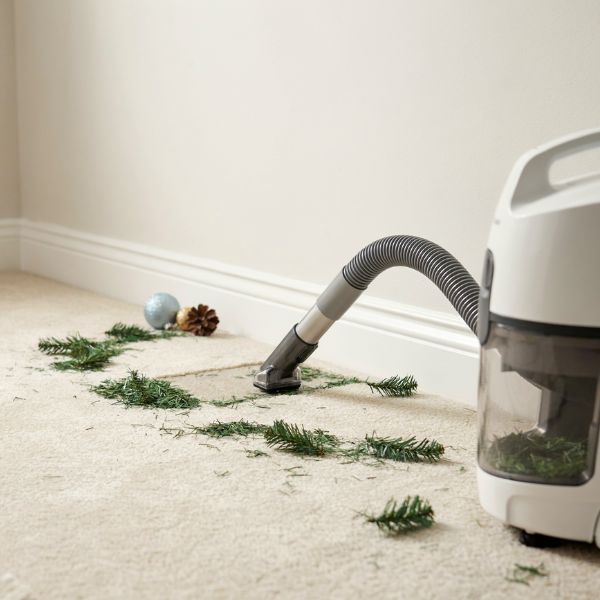
Pine needles hide in places the main floor head of your vacuum will never reach. Switch to the hose attachment and work the baseboards, the corners where the tree stood, the gap between the floor and the wall, and the track across the room where the tree was carried out.
What you need: your vacuum with the hose and crevice attachments. This one is completely free.
Go slowly along the edges, then do the open floor. Needles work deeper into carpet fibers over a few days, so plan a second pass later in the week and expect to still find a few in March. Everybody does.
Time estimate: about 15 to 20 minutes for one room, and it’s an estimate that shifts with how much the tree shed.
6. Glitter in the Rug
Vacuuming glitter mostly just relocates it. Lift it first with something sticky, then vacuum what’s left.
What you need: packing tape or painter’s tape wrapped sticky-side-out around your hand, or a lint roller. Lint rollers run about $3 to $5 at Target or Walmart, which beats the $12 to $15 you’d spend on a handheld rug rake that does the same job.
Press the tape down on the glittered area and lift straight up, working in small sections. Change the tape surface often. Once the obvious sparkle is gone, vacuum the area in two directions.
Hard floors go faster: a damp microfiber cloth picks glitter up in one pass where a broom scatters it.
Time estimate: roughly 10 to 15 minutes per rug.
7. The Twice-a-Year Spots While the Shelves Are Bare
This is the one week the mantel, the shelves, and the tops of the furniture are actually empty, which makes it the window for the spots that only get touched now and in the spring.
What you need: microfiber cloths, around $10 for a 24-pack at Walmart, plus an extendable duster for about $10 to $15 at Target.
Dust the tops of bookcases, the mantel, the picture frames, and the window casings. Then pull the sofa and side tables away from the wall and clean the baseboards and floor behind them.
Back when my kids were little, these corners got skipped from November straight through to spring. Doing them in January is why the house feels calm again instead of just tidy.
Time estimate: about 30 to 45 minutes for a main living room.
8. Furniture Back in Place
Once the tree is gone, everything that got shoved sideways for six weeks goes home. The problem is the carpet dents left behind where the sofa and chairs used to sit.
What you need: a few ice cubes and a towel. Costs nothing.
Set an ice cube in each dent, let it melt completely, blot the damp spot with a towel, then fluff the fibers up with your fingers or a spoon edge. Deeper dents and the full set of options are covered in 18 Carpet Cleaning Tricks for Salt, Mud, and Holiday Spills.
Measure once before you slide the sofa back so you’re not shifting it three times. I spend about $7 on felt furniture pads at Walmart if the legs are marking your floors.
Time estimate: around 10 minutes, plus melt time.
9. Couch Cushions and Throw Blankets
Pull the couch cushions out, and you’ll find candy cane wrappers, a stray ornament hook, crumbs from a dozen plates of cookies, and probably the remote everyone blamed each other for losing.
What you need: your vacuum’s upholstery and crevice attachments, and a box of baking soda, around $1.50 at Aldi.
Take every cushion off, vacuum the frame and the crevices, then vacuum the cushions on both sides. For lingering smells from a room full of people, sprinkle baking soda on the upholstery, wait 20 minutes, and vacuum it up. A can of fabric refresher costs $6 to $8 and only masks it.
Wash every throw blanket that got used as a nap blanket over the holidays. Those go back folded, not draped.
Time estimate: about 20 to 30 minutes.
10. Windows and Fingerprints
Handprints at kid height, nose prints at dog height, and a storm door that hasn’t been clear since November. A houseful of guests shows up on the glass more than anywhere else.
What you need: a microfiber cloth and glass cleaner. Mix your own with half water and half white vinegar in a $1.25 spray bottle from Dollar Tree, or buy Windex for about $4 at Walmart. Never combine an ammonia-based glass cleaner with bleach or any acid cleaner.
Spray the cloth rather than the glass so you’re not chasing drips; wipe side to side, then buff dry with a second cloth. Do the window sills and the door glass on both sides while you’re at it.
Time estimate: roughly 20 to 30 minutes for main-level windows and glass doors.
11. Candle Wax
The year I filled the house with real taper candles, I spent January discovering wax on the rug, the windowsill, and one very unlucky side table. Holiday candles drip in places you never notice while they’re lit.
What you need: a plastic scraper or an old gift card, plus whatever the linked method calls for.
Let the wax harden completely, then scrape up the raised part gently so you’re lifting wax instead of grinding it into the fibers. From there, the full removal method for carpet and fabric is in 18 Carpet Cleaning Tricks for Salt, Mud, and Holiday Spills, including what to do with colored wax that leaves a dye stain behind.
This step costs nothing you don’t already own.
Time estimate: about 10 to 15 minutes per spot.
Dining Room and Kitchen
12. Table Linens
If the tablecloth has been sitting in a heap on top of the dryer since the 26th, every stain in it is setting deeper by the day.
What you need: stain treater, cold water, a clear surface for folding.
Shake crumbs outside first. Work the treatment into every spot you can find, cranberry, gravy, wine, and let it sit for about ten minutes. Wash cold, then check each stain before anything goes in the dryer, because heat locks in whatever didn’t lift.
Shout Advanced Gel, or Zout, comes in under $8 at Walmart, and one bottle covers a whole season of linens.
Time estimate: about 10 minutes of active treating plus a normal wash cycle.
13. The Dining Table and Chairs
Your table did more work in six weeks than it usually does in six months. Hot dishes, wet glasses, and a lot of elbows.
What you need: two microfiber cloths, mild dish soap and warm water, wood conditioner if the finish looks dry.
Clear it completely, including the centerpiece that’s still sitting there. Wipe with barely damp suds, dry immediately, and don’t let water sit on wood. Then wipe chair seats, rails, and the underside edge of the table where sticky fingers land.
Howard Feed-N-Wax costs around $14 at Walmart or Amazon. One bottle lasts years, and a thin coat buffed in brings back wood that’s gone dull.
Time estimate: about 20 to 30 minutes, longer if you condition the wood.
14. Chair Seats and Cushions
Upholstered dining chairs quietly absorbed everything that missed a plate in December, and nobody flips them over to check.
What you need: vacuum upholstery attachment, a spot cleaner, a white cloth.
Vacuum each seat, including the crease where the cushion meets the frame. Blot any spots with a spot cleaner on a white cloth so you can see what’s transferring, and work from the outside of the stain in. Let seats dry fully before anyone sits down, or you’ll press moisture back into the padding.
Folex Instant Carpet Spot Remover costs maybe $6 to $8 at Walmart and works on upholstery as well as rugs. One bottle handles six chairs several times over.
Time estimate: about 15 to 20 minutes for a set of six.
15. Serving Pieces
China, crystal, and serving platters only come out a few times a year, which means stains and tarnish have months to sit before anyone notices.
What you need: dish soap, a soft cloth, dry towels, felt plate dividers if you store china stacked.
Hand-wash anything gold-rimmed, hand-painted, or older than you are. Dry completely, inside and out, before it goes back in the cabinet. A platter put away even slightly damp is how cabinets start smelling musty.
A set of felt dividers costs around $15 to $20 at Target or Amazon. Use one between each plate, and figure 12 to 24 pieces covers most china sets.
Time estimate: about 30 to 45 minutes.
16. The China Cabinet and Buffet
If the buffet doubled as the drink station, there’s a ring on it and fingerprints all over the cabinet glass at about chest height.
What you need: glass cleaner, microfiber cloth, mild soap for the cabinet top.
Empty the buffet top completely. Wipe the surface, then treat any water rings while you’re there. Clean the glass doors on both sides, since the inside picks up dust every time somebody pulls out a serving bowl.
Windex costs around $4 to $5 at Walmart, and a two-pack of microfiber cloths comes in under $4 at Target. Skip paper towels on glass; they streak.
Time estimate: about 20 to 30 minutes.
One warning worth repeating: never combine an ammonia glass cleaner with bleach or any acidic cleaner.
17. The Fridge Clean-Out
Start the kitchen here, because this is where the holidays left the most actual food behind. Leftovers nobody claimed, three open jars of cranberry sauce, and spills from a fridge that was packed too tight to see into.
What you need: trash bag, warm soapy water, a cloth, a box of baking soda.
Pull everything out, toss what’s past its date, and wipe shelves before anything goes back. Check condiment expiration dates in the back while the shelves are empty.
I spend about $1 to $2 on a fresh box of baking soda at any grocery store, and it keeps the smell down for a few months.
For putting it back in a way that holds, see our guide to organizing a fridge rather than reloading it the old way.
Time estimate: about 30 to 45 minutes.
18. The Freezer
A freezer stuffed with turkey carcass, leftover pie, and two casseroles somebody brought over needs the same pass the fridge just got.
What you need: trash bag, cooler or a cold porch, cloth, masking tape, and a marker.
Work fast. Move keepers to a cooler, toss anything unidentifiable or freezer-burned, wipe the shelves, and put things back in groups so you can actually find the meat.
Label everything you kept with the date. A roll of masking tape and a Sharpie totals maybe $5 at Walmart, a fraction of what freezer labels cost.
Time estimate: about 20 to 30 minutes for an upright or side-by-side, longer for a chest freezer.
What you find here usually covers a week of easy January dinners.
19. Small Appliances Used for Hosting
Unplug everything before you touch it with a damp cloth. The crockpot, the roaster oven, the stand mixer, and the coffee maker all ran harder than usual this month.
What you need: dish soap, white vinegar, microfiber cloth, a soft brush for crevices.
Wash removable crocks and bowls by hand or in the dishwasher. Wipe heating bases with a damp cloth only; never submerge them. Run a half-vinegar, half-water cycle through the coffee maker, then two cycles of plain water to rinse.
A gallon of white vinegar runs about $4 at Walmart and replaces descaling solution that costs three times as much.
Time estimate: about 15 to 20 minutes per appliance.
20. The Pantry
Last January I found a bag of red and green sprinkles from two Christmases back, hiding behind the flour. The grandkids and I had used maybe a teaspoon of them.
What you need: trash bag, damp cloth, zip-top bags or airtight containers, a marker.
Pull the baking shelf out first. Toss hardened brown sugar and expired leavening, since baking powder more than a year old won’t rise anything. Transfer open bags of flour, sugar, and chocolate chips into sealed bags so pantry moths don’t find them.
A box of gallon zip-top bags totals maybe $4 to $6 at Walmart and handles everything left over from holiday baking.
Time estimate: about 20 to 30 minutes.
Candy canes keep for a year if sealed. Crushed, they’re good on ice cream.
21. The Dishwasher and Sink Drain
More loads ran through that dishwasher in December than in any other month, and it shows in the filter.
What you need: dishwasher cleaner tablet, white vinegar, dish soap, a sponge.
Twist out the bottom filter, rinse it under hot water, and scrub the mesh with a little dish soap. That trapped gunk is usually why glasses come out cloudy. Wipe the door gasket where grease collects, then run an empty hot cycle with a cleaner tablet.
I spend about $7 to $9 on Affresh tablets for a six-pack at Target. A cup of white vinegar on the top rack does a decent job for about 40 cents if you’d rather use what’s already under the sink.
Time estimate: about 15 to 20 minutes of active work plus the cycle.
Guest Spaces and Kids’ Spaces
22. Guest Bedding
Strip every bed the day the last car pulls out of the driveway, not the week after.
What you need: detergent, dryer balls or sheets, and a storage bag or bin for each set.
Pull sheets, pillowcases, and the mattress pad all at once and wash on the warmest setting the tags allow. Dry completely, because linens stored even slightly damp come out of the closet smelling like a basement in June. Fold each set and tuck it inside one of its own pillowcases so the whole set stays together by bed size.
Nothing new to buy if you have detergent on hand, though space-saver bags total maybe $12 to $15 for a four-pack at Walmart.
Time estimate: about 15 minutes of active stripping and folding, plus roughly two hours of wash and dry time. Your washer size will shift that.
23. Guest Pillows and Mattress Protectors
Guest pillows take more use in six weeks of hosting than they do the rest of the year, and nobody washes them in the moment.
What you need: detergent, dryer balls or two clean tennis balls, and a mattress protector if yours is past saving.
Check the care tag first, then wash two pillows at a time so the drum stays balanced. Dry on low with the dryer balls until the center is bone dry, which takes longer than you think. Wash the mattress protector on its own. If a pillow stays folded in half when you bend it, it’s done its tour.
A standard quilted mattress protector costs around $18 to $25 at Target. Replacement pillows run about $10 to $15 each at Walmart.
Time estimate: roughly 20 minutes of hands-on work, plus a long dry cycle.
24. The Air Mattress and Sleeper Sofa
If the overflow crowd slept on an air mattress or the pull-out, that bed needs attention before it goes back in the closet.
What you need: a drop of dish soap in warm water, a microfiber cloth, a dry towel, and your vacuum hose attachment.
Wipe the flocked top with the soapy cloth, then dry it fully before you deflate and fold. Rolling up a damp air mattress is how you end up with mildew spots next Thanksgiving. For a sleeper sofa, pull the mattress open, vacuum the mattress surface and the frame crevices underneath, then let it air out for an hour before folding it back in.
I spend about $7 on a vinyl patch kit at Walmart, and it belongs in the storage bag with the mattress.
Time estimate: about 20 to 30 minutes.
25. The Guest Room Reset
A guest room quietly turns into a catch-all during the holidays. Gift bags, wrapping scraps, and the stuff that got cleared off other surfaces all land in there.
What you need: a laundry basket, all-purpose spray, a microfiber cloth, and the vacuum.
Work this like a deep-cleaning bedroom checklist. Clear every surface into the basket first, then dust the nightstand, lamp, ceiling fan blades, and blinds from top to bottom. Pull out whatever got shoved under the bed and deal with it instead of sliding it back. Vacuum under the bed and across the closet floor, then open a window for ten minutes.
Nothing to buy. A six-pack of microfiber cloths comes in under $6 at Walmart if yours are stringy.
Time estimate: about 30 to 45 minutes, depending on what’s hiding under that bed.
A Cleaner Home Awaits
That dry, dropping tree taught me the holidays need a real end date, not just a slow fade into February. Glitter in the rug and pine needles in every corner feel permanent, but they’re not. One step at a time, this house comes back to you.
Start with Pine Needles if you’re tired of finding them in your socks, tackle the Fridge Clean-Out if the leftovers have taken over, or hit the Guest Room Reset once the company’s finally gone. You don’t have to do all 25 steps in a weekend. Pick one, check it off, and let that small win carry you to the next. By the time you’re done, your home won’t just look clean, it’ll be yours again, calm corners and all.