January hits and the credit card statement from December is still stinging, but the kids are staring at you like you owe them entertainment. I used to book a $60 trip to the trampoline park just to fill a Saturday, then feel sick about it when the bill came a week later. Winter doesn’t have to work that way.
The free winter activities on this list cost nothing at all, which is a different thing from cheap. Sledding on the neighborhood hill just needs a hill and something to slide on. A snow scavenger hunt turns your own yard into an afternoon of searching for icicles and animal tracks. A winter nature walk around the block gets everyone outside without spending a dime.
Outside
1. Sledding on the Neighborhood Hill
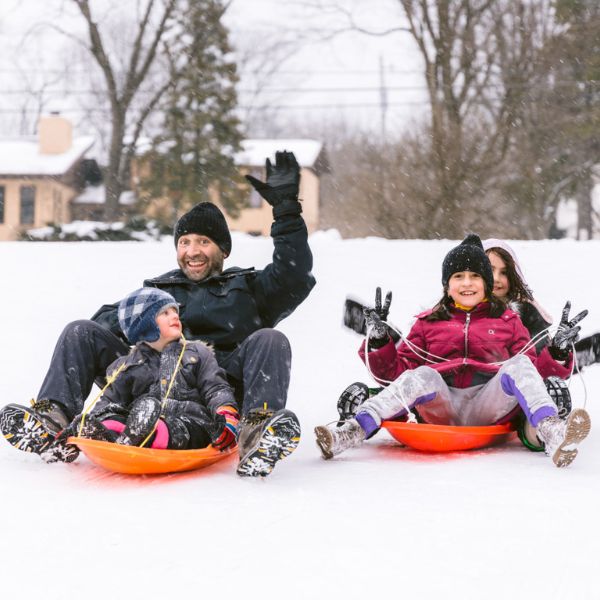
When the forecast finally drops enough snow to cover the grass, this is the first thing kids ask for, and it costs nothing to say yes. Cost: $0. If you don’t own a sled, a flattened cardboard box, a plastic storage bin lid, or a laundry basket all slide just fine on packed snow.
Plan on an hour to ninety minutes before hands and toes give out. Works for toddlers riding down on a lap all the way through teenagers who want speed.
Safety note: walk the hill before anyone rides it, and skip any slope that runs out toward a street, a fence, or a pond. Feet first, always.
Come inside every 30 minutes to swap wet gloves for dry ones. That one habit doubles how long everybody lasts.
2. Snowman, Snow Fort, or Snow Wall
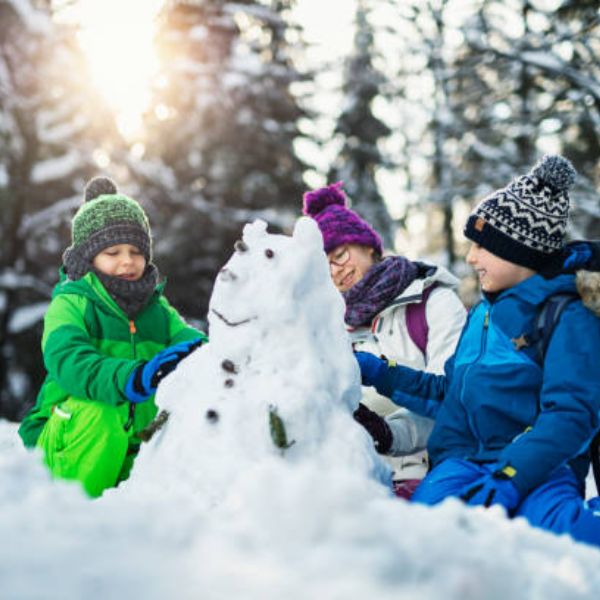
Packing snow, the heavy wet kind that holds its shape, is the only thing you truly need. Cost: $0. Raid the kitchen for tools: a spatula for smoothing, a plastic bucket or an old recycling bin to mold snow bricks, a scarf and a couple of buttons for the face.
Back when my kids were little, they’d spend an entire Saturday afternoon on a fort and then abandon it for a snowball fight. Both counted as a win.
Best for ages four and up, though little ones are happy just patting snow onto the pile. Give it two to three hours if you’re building walls.
Safety note: build walls and low seats, never tunnels or roofs, because packed snow collapses without warning.
3. Backyard Obstacle Course
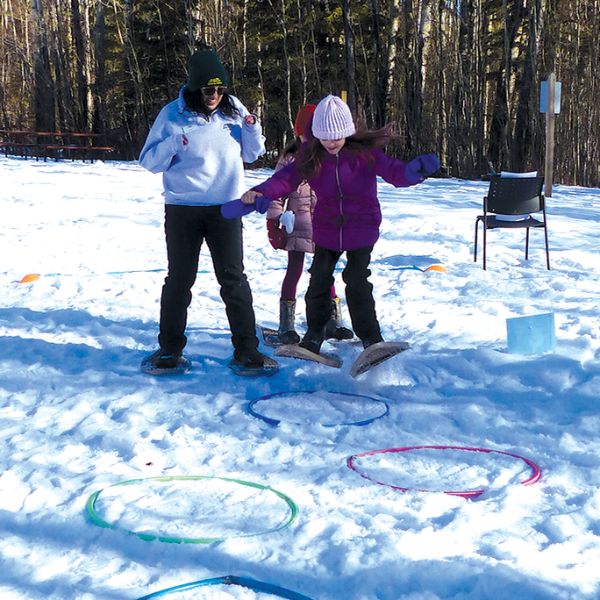
Twenty minutes of stomping paths through fresh snow turns into an hour of kids running laps and arguing about times. Cost: $0.
Lay out the course with your boots: a winding path, a loop around the tree, three lawn chairs to weave through, a snow pile to climb, a finish line drawn with a shovel. Use the stopwatch on your phone and let everybody take a turn beating the record.
Elementary-age kids love this most, but a four-year-old will happily follow the path in circles.
Walk the yard first and clear anything hidden under the snow. Sprinkler heads, garden edging, and frozen dog toys are all ankle-twisters you can’t see.
The course never stays put anyway. Somebody adds an obstacle every round, and that turns out to be the part that keeps them out there.
4. Snow Scavenger Hunt
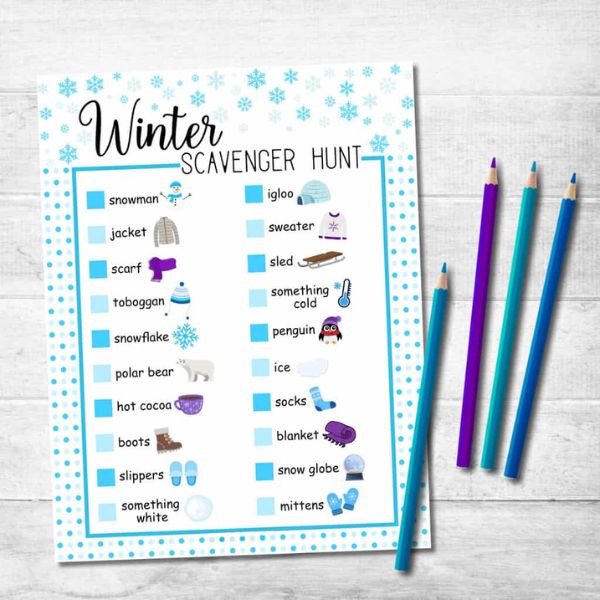
Kids who whine about walking will go twice as far holding a list. Cost: $0, since all it takes is a sheet of paper and a pencil you already have.
Write out ten things to find: animal tracks, an icicle, a bird’s nest in a bare tree, an evergreen, a red berry, a frozen puddle, something the plow pushed into a pile. Make it a checklist for readers or draw simple pictures for preschoolers.
Give it 30 to 45 minutes, more if they get competitive.
Set a clear boundary before you start, whether that’s your yard, the block, or the cul-de-sac.
Older kids can do a photo version with your phone, which means nothing wet and muddy comes back inside.
5. Winter Nature Walk Around the Block
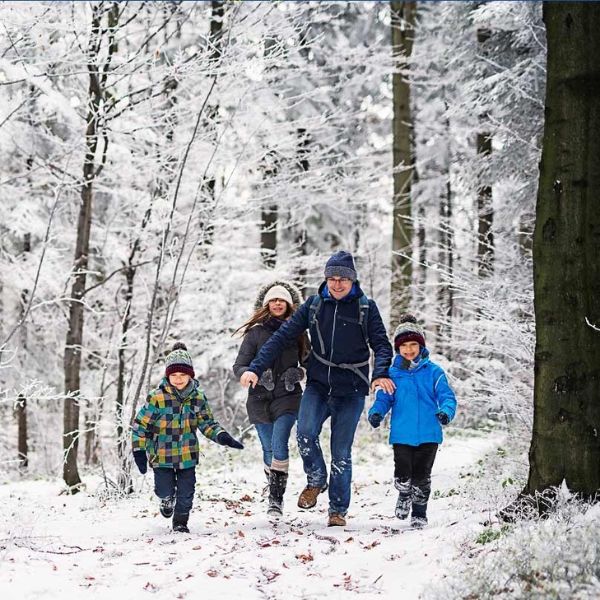
A slow walk through your own neighborhood looks completely different in January, when the leaves are gone and you can see the shape of every tree and every squirrel nest tucked in the branches. Cost: $0.
Watch for animal tracks crossing yards and driveways. Rabbit, deer, and the occasional neighborhood cat all leave a trail easy enough for kids to spot and follow.
Thirty to sixty minutes, and it works for every age. Empty nesters, this makes a genuinely nice after-dinner date night with a thermos from your own kitchen.
Sidewalks refreeze after dark, so go while there’s light or carry a flashlight and stick to salted paths. Layers matter more than one heavy coat.
6. Backyard Bird Watching
Your kitchen window turns into the best seat in the house in winter, because the trees are bare and the birds are easy to spot. Cost: $0.
Keep a running tally taped to the fridge and add a mark every time someone spots a cardinal, a blue jay, a woodpecker, or a junco. Old binoculars from the closet help, but they’re not required.
Toddlers will watch for five minutes, elementary kids for twenty, and grandparents will keep the list going all season.
If you want more traffic at the window, smear peanut butter on a pinecone from the yard, roll it in oats from the pantry, and hang it with kitchen string.
Set the feeder away from shrubs where cats can hide.
7. Stargazing on a Clear Cold Night
Winter gives you the clearest skies of the year, which sounds backward until you’re standing in the driveway looking straight up at Orion. Cold air holds less moisture, so the stars are sharper than anything you’ll see in July. Cost: $0.
Turn off the porch light and give everyone’s eyes a full ten minutes to adjust. Orion’s belt, the Big Dipper, and the moon are enough to keep kids interested.
Twenty to thirty minutes is the sweet spot before the cold wins. Works for all ages, and it’s a quiet one for couples after the house goes still.
Bundle up more than you think you need, since standing still gets cold fast, and watch for ice on the driveway.
8. Old-Fashioned Snow Games
Even kids who’ve lost interest in building things will play these for an hour straight. Cost: $0, and the yard does all the work.
Stomp a big wheel with spokes for fox and geese, where runners have to stay on the paths and the center circle is safe. Line up empty cans or cardboard boxes on the picnic table for snowball target practice. Finish with snow angels, which never get old.
My grandkids taught me their own rule for snowball fights: below the shoulders only, no ice balls, and anybody can call a time-out.
Ages five to twelve is the sweet spot, though a preschooler is content making angels the whole time.
Line up the boots by the door before anyone comes in and you’ll save your floors.
At Home
9. Board Game Marathon With Everything Already in the Closet
Pull every game off the shelf, stack them on the kitchen table, and let the kids decide the playing order. Cost: $0, because you already bought these games, probably years ago.
Plan on two hours minimum, though a real marathon can eat a whole afternoon. Elementary-age kids through adults do best with this, and toddlers can play a simple matching or color game in the same room so nobody feels left out.
Missing pieces are not a reason to skip a game. Pennies, buttons, and bottle caps stand in for lost tokens just fine, and a scrap of paper works as a replacement card.
Run it like a tournament with a bracket drawn on notebook paper. The winner picks what’s for dinner from whatever’s already in the pantry.
10. Baking Day Using Only What’s on the Pantry Shelf
Back when we were paying off debt, a snow day meant flour, sugar, and whatever else was in the cabinet, and the kids never once noticed it wasn’t a special trip to the store. Cost: $0, as long as you build the day around ingredients you already have instead of shopping for a recipe.
Give it 45 minutes for drop biscuits or pancakes, closer to two hours if you’re doing a yeast bread and letting it rise.
Kids as young as three can dump and stir. Elementary-age kids can measure and read the recipe out loud, which quietly counts as school work on a day off.
No-bake oatmeal cookies are the easiest starting point when the pantry is thin. Oats, sugar, cocoa, and butter make a full batch.
11. Blanket Fort Camp Night in the Living Room
When the walls start closing in around day three of a school break, the fort fixes it. Cost: $0 using dining chairs, couch cushions, bedsheets, and heavy books or clothespins to hold the corners down.
Building takes about 30 minutes with the kids helping, and once it’s up, it usually holds their attention until bedtime.
Toddlers through about age ten are the sweet spot. For the two of you after the kids are grown, a pile of pillows on the floor with the lamps off is the same idea with less crawling around.
Turn it into a camp night with flashlights, sleeping bags, and stories told out loud instead of read. Letting them actually sleep in the fort is what makes it memorable.
12. Movie Night on a Streaming Service You Already Pay For
Your subscription is already coming out of the checking account every month, so the movie itself costs nothing extra. Cost: $0. If you’d rather not use streaming at all, your library lends DVDs for free with a card you already have, and most library systems also give you Kanopy or Hoopla, which stream movies at home for nothing.
Two hours, start to finish, and it works for every age in the house depending on what you pick.
Popcorn from loose kernels on the stove costs pennies and you almost certainly have some. Skip the pre-popped bags and the theater-style stuff.
Let each family member take a turn choosing on rotation so nobody feels overruled. Making paper tickets and setting up a pretend box office at the door turns a two-hour movie into a whole evening of anticipation.
13. Jigsaw Puzzle Set Up on a Card Table
Somewhere in your house is a puzzle nobody has touched since it was gifted. Cost: $0 to pull it out, and it’s the rare activity that runs for days instead of an hour.
A 300-piece puzzle takes an evening. A 1,000-piece one can sit out all week, with people wandering by and adding three pieces at a time.
Big-chunky-piece puzzles work for kids around four and up. Older elementary kids can handle 300 pieces with help, and adults will happily lose an hour to a hard one.
Set it on a card table or a sheet of cardboard so you don’t lose the dining table. When you finish, trade with a neighbor or a friend for one of theirs. Free variety, permanently.
14. Learn a Real Skill From a Free Online Tutorial
Free video tutorials exist for knitting, drawing, guitar, piano, origami, hand lettering, and roughly anything else you’ve thought about trying, and YouTube alone covers every one of them. Cost: $0 as long as you stick to supplies already in the house.
Yarn in the closet, printer paper and a pencil, the guitar someone abandoned in the basement, a stack of junk mail for paper folding. If a tutorial requires buying a kit, close it and find another one. There are thousands.
A single lesson runs 20 to 30 minutes. A skill you actually keep takes all winter.
Tweens, teens, and adults get the most out of this, though elementary kids do well with drawing tutorials.
Put two 20-minute sessions a week on the calendar and treat them like appointments. That’s what turns it into a skill instead of an afternoon.
In Town
15. Library Story Time
When the walls start closing in and it’s too cold for the park, story time becomes the standing appointment that saves the week. Cost: $0, and most branches don’t even require a card to sit in.
What you need: coats, and a library card only if you’re checking out books on the way home.
Time: 30 to 45 minutes, plus another twenty if you let them stay in the play area afterward.
Best for: babies through preschoolers, though plenty of libraries run an after-school version aimed at elementary-age kids.
Arrive ten minutes early. Story time rooms fill up fast in January, and a front-row spot on the carpet matters more to a three-year-old than anything else happening in that building.
16. Anything Else on the Library Event Calendar
Story time is the program everybody knows about. The rest of the calendar is where the range is: LEGO club, board game meetups, teen craft nights, free movie screenings, sewing classes, author talks, tech help sessions for grandparents who want to figure out their phones.
Cost: $0 at nearly every branch. Craft programs sometimes ask you to register ahead because supplies are limited, and the library is the one supplying them.
Time: 45 minutes to two hours, depending on the program.
Best for: every age under your roof, which almost nothing else on this list can claim.
Grab the printed monthly calendar at the checkout desk and stick it on the fridge. A paper calendar you walk past gets used. A website you meant to check does not.
17. A Museum’s Free-Admission Day
Plenty of museums set aside free-admission days, free evenings, or free hours for local residents. Art museums, children’s museums, science centers, and small local history museums all run some version of it. Cost: $0 on those specific days, though the schedule and any timed-reservation requirement vary by city and by season, so confirm on the museum’s own site before you load everyone into the car.
What you need: a stroller for little ones, water bottles filled at home, and snacks in a bag so nobody has to negotiate with the café.
Time: two to three hours, which is about where attention spans give out anyway.
Best for: elementary-age kids and up. Go right at opening, because free days draw a crowd by noon and the first hour is the quiet one.
18. Open Gym at the Community Center
Somewhere in your town there’s a gym floor sitting empty on a weekday afternoon, and your parks and recreation department probably opens it to the public. Open gym, open play, family hours on the indoor walking track. Cost: $0 for residents at most centers, though some ask you to show proof of address or pick up a free rec card at the front desk.
What you need: clean indoor shoes, a ball if you already own one, water from home.
Time: an hour or two, and they will sleep hard that night.
Best for: elementary-age kids through teenagers with energy to burn.
Ask the front desk about toddler-only open play hours. Most centers have them and almost nobody advertises them.
19. Free Public Skate at the Local Rink
Community rinks often run free public skate sessions through the winter, sometimes sponsored by a local business, sometimes offered straight from the city. Cost: $0 for the ice time. If the rink charges for rental skates, ask whether the free session includes them, or borrow a pair from a friend whose kids outgrew theirs. Hand-me-down skates circulate fast in a neighborhood once you start asking.
I took the grandkids to a free skate last winter and spent the entire hour holding two sets of mittens while they inched along the wall. They talked about it for a month.
Best for: age four and up. An hour on the ice is plenty for beginners.
Skip frozen ponds entirely. Ice thickness on natural water is not something anyone should eyeball, and a supervised rink costs nothing anyway.
20. A Church or Community Winter Event
If you’ve lived in the same town for years and never looked at what the churches are doing in January, you’re walking past a lot of free entertainment. Chili suppers, pancake breakfasts, live nativities, winter carnivals, cocoa nights, craft fairs with a kids’ table in the corner. Cost: $0 to attend, and these are open to anyone, member or not. Many will have a donation basket somewhere. Giving is optional and nobody is watching.
What you need: warm clothes and a little willingness to walk into a room where you don’t know everyone.
Time: an hour to a whole evening.
Best for: all ages, and especially good for families who are new in town.
Watch the marquee sign out front rather than the website. Small congregations post events there weeks before anything appears online.
21. A School Concert or Community Performance
Elementary and middle school winter concerts, choir performances, art shows, science fairs, and robotics demonstrations are usually open to the public and usually free. Cost: $0. High school athletic events typically charge at the gate, so aim for the arts and academic side of the school calendar instead.
What you need: nothing at all. Show up twenty minutes early if you want a seat with a view.
Time: about an hour, often less for the elementary version.
Best for: grandparents, empty nesters who miss the noise, and toddlers who will watch a fifth-grader wrestle a trombone like it’s a headline act.
District websites keep public event calendars, and the school office will tell you over the phone which performances welcome the community.
22. An Afternoon of Window Shopping at the Mall
The mall in January is warm, well lit, and free to walk around in, which is the entire appeal. Cost: $0, as long as you eat before you go and say the rule out loud in the parking lot: we are looking, not buying.
Walking laps past the store windows on the coldest days of the year costs nothing and can easily kill an hour or two, especially if you turn it into a game of picking the ugliest sweater on display.
What you need: comfortable shoes and your phone for the seasonal photo backdrops that stay up well past the holidays.
Time: an hour or two.
Best for: toddlers in strollers through teenagers who want to be seen somewhere. Weekday mornings are the quietest, which mall walking clubs figured out decades ago.
Worth Getting in the Car For
23. A Slow Drive Through the Best-Lit Streets in Town
Cost: $0. Everybody piles in wearing pajamas after dinner, and you drive the neighborhoods that go all out with lights. What you need is already in the house: blankets, a thermos of coffee or cocoa from what’s in the cabinet, and a phone playlist.
Time: 30 minutes to an hour, depending on how far you wander.
Best for: every age. Toddlers usually fall asleep on the way home, and empty nesters can run this as a quiet date night with the radio low.
Hand each kid a category to judge, best inflatable, most lights on one house, worst color combination, and let them argue about it the whole way home. Go the first week of January, before displays start coming down.
24. A Winter Hike at a Park With No Entry Fee
Plenty of city, county, and state parks charge nothing to walk in during winter, and the trails are emptier than they’ll be all year. Cost: $0. You need boots, layers, gloves, and a water bottle from your own cupboard.
Time: two hours to a half day.
Best for: elementary-age and up, though a shorter paved loop works fine with little ones in a stroller.
Winter trail rules matter more than summer ones. Dress in layers you can peel off, tell someone your route, and turn back at the halfway point of your daylight, not your energy. Fee structures and winter gate hours change by season, so pull up the park’s own page before you drive out.
25. An Afternoon at a Nature Center
Nature centers are one of the most overlooked free stops in almost any region. Many are operated by a county parks department or a conservation district, and admission is either free or donation-based. Cost: $0.
What you need: nothing beyond coats and curiosity. Most have live animal displays, touch tables, bird viewing windows, and a warm room to thaw out in.
Time: an hour or two, longer if there are trails attached.
Best for: toddlers through early elementary, who will happily stare at a snake or a turtle for twenty minutes straight. Call ahead or check the site, because winter hours are often shorter and some centers close a weekday or two.
Winter Boredom Doesn’t Stand a Chance
That post-holiday credit card sting is real, and so is the pressure to keep the kids entertained until spring. You don’t need the trampoline park or another $60 outing to get through a long Saturday. The activities on this list prove that some snow, a library card, and a little creativity go a lot further than your wallet thinks.
Start with a Snow Scavenger Hunt if the kids need to burn energy outside, try a Blanket Fort Camp Night when it’s too cold to leave the house, or head to Library Story Time when you need an hour that doesn’t cost anything and doesn’t require cleanup. Winter feels long, but it doesn’t have to feel expensive. You’ve got everything you need to fill these days already.