January hits and you realize winter happened around you instead of with you. The snow came and went while you caught up on laundry, and nobody made a single snow angel.
Three winters in a row, I told my kids we would hit the sledding hill “this weekend.” We never went. The fourth January I wrote it on the calendar in pen, the way I would a dentist appointment, and that Saturday we finally stood at the top of it with one plastic sled and no gloves that matched. This winter bucket list is built so that doesn’t happen again — building a snowman and naming it takes twenty minutes and costs nothing, an outdoor rink turns a gray afternoon into a memory, and a nature hike gets everybody outside with no planning at all.
Print the Checklist and Put It on the Fridge
The whole point of a bucket list is seeing it every day, not remembering it in March. Grab the free printable version below, stick it on the fridge with a magnet, and let the kids check things off themselves. One page, all 27, with boxes.

Outdoors
1. Build a Snowman and Give It a Name

Cost: free, or about $1 for a bag of carrots at Aldi if the produce drawer is already empty.
This is the easiest win on the whole list because it requires nothing but snow and about 30 minutes. Wet, heavy snow packs best, which usually means a day when the temperature sits right around 30 degrees. Powder that will not hold together is the number one reason snowman attempts fall apart.
Good for toddlers through adults, since little ones can roll the small head ball while someone bigger handles the base. Use whatever the kitchen offers for a face. Buttons, dried beans, pretzel sticks, a scarf nobody wears anymore.
The naming part matters more than you would think. A snowman named Gary gets visited every morning until he melts.
2. Go Sledding at the Best Hill in Town
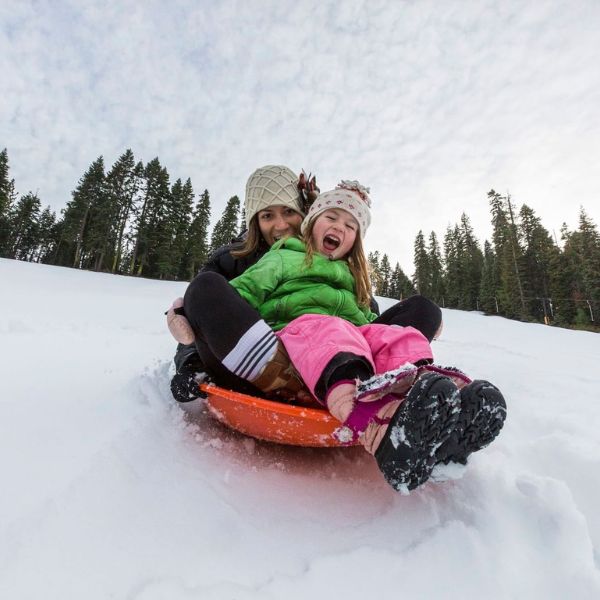
A basic plastic sled runs about $10 to $20 at Target or Walmart, and a foam toboggan sits at the lower end of that. Buy them in December if you can, because sleds vanish from shelves by mid-January and the leftovers are picked over.
Ages 3 and up with an adult at the bottom of the hill, older kids solo.
When my kids were little, we drove past three closer hills to get to the one behind an elementary school with a long, gentle run and no trees. That drive was worth it every single time.
Ask around at church or work for the local favorite. Every town has one hill people swear by, and it is rarely the obvious one.
3. Lace Up at an Outdoor Ice Rink
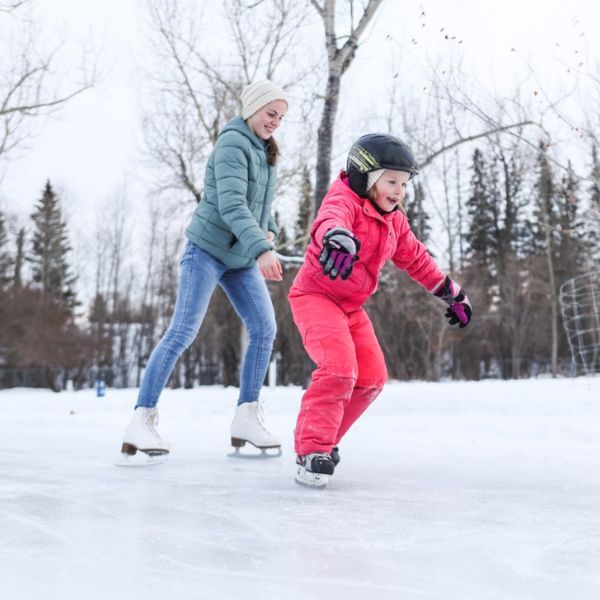
Skate rental typically costs around $5 to $15 per person, and plenty of city-run outdoor rinks charge admission on the lower end or nothing at all. Rink and festival pricing swings a lot depending on where you live and what week it is, so call before you load up the car.
Best for ages 5 and up, though many rinks loan out plastic support walkers for younger skaters.
Wear one pair of thick socks, not two. Doubling up makes rental skates fit badly and gives kids blisters within twenty minutes.
Go on a weekday afternoon if your schedule allows. Emptier ice means beginners get to fall down without an audience, which is half the battle.
4. Fill a Feeder and Watch Who Shows Up

A 10-pound bag of black oil sunflower seed comes in around $12 to $15 at Walmart and will keep one feeder going for most of the winter. A basic hanging feeder runs $10 to $20, or skip buying entirely and roll pinecones in peanut butter and birdseed with string tied to the top.
Ages 3 and up, and it holds attention far longer than you expect.
Keep a running tally near the window of who shows up. Cardinals, juncos, and the occasional loud blue jay chasing everyone else off turn this into its own quiet game.
Hang it where you can see it from a window you actually sit near. A feeder in the far corner of the yard is a feeder nobody watches.
5. Paint the Snow

Spray bottles cost $1.25 each at Dollar Tree, and a four-pack of food coloring costs close to $4 at Walmart. Buy three or four bottles so nobody has to share, and the whole project comes in under $10.
Fill each bottle with warm water, add ten to fifteen drops of coloring, and shake. Warm water dissolves the dye better and sprays cleaner in the cold.
Perfect for ages 2 through about 10, and it turns a boring flat yard into a canvas.
Two warnings from experience. Red and blue will stain light-colored gloves, so use old ones. And keep the painting away from the driveway and the front steps, since color on packed snow near concrete has a way of sticking around.
6. Build a Snow Fort or Igloo
Free if you use what is already in the garage. A rectangular plastic storage tote or a bread loaf pan makes perfect snow bricks, and a shovel does the rest. If you want the real thing, a snow brick mold goes for about $10 to $15 on Amazon.
Better for ages 5 and up, since packing and stacking takes real arm strength.
Wet, sticky snow works. Dry powder collapses no matter how carefully you build.
Plan on an afternoon, not an hour. A fort with actual walls takes two or three hours of steady work, which is exactly why kids remember building one for the rest of their lives.
7. Freeze Bubbles on the Coldest Morning of the Year
Bubble solution costs $1.25 at Dollar Tree, or make your own free with dish soap, water, and a spoonful of sugar for stronger walls.
You need real cold for this, ideally 10 degrees or below, and dead-still air. Blow the bubble slowly, let it settle on a glove or a snowbank, and watch frost crystals spread across the surface like frozen lace.
Ages 6 and up, mostly because it takes patience and a light touch that younger kids do not have yet.
Early morning is your best shot, before wind picks up. Have a phone ready, because the crystallizing happens in about fifteen seconds and it is the single prettiest thing on this list.
8. Build a Fire in the Backyard and Make S’mores in the Snow
A bundle of firewood costs about $6 to $8 at most grocery stores or gas stations, and s’mores fixings for a family of five come in under $10 at Aldi. One bundle burns long enough for an evening.
Ages 4 and up with an adult managing the fire.
Cold air, warm hands, sticky fingers, a backyard fire pit in February delivers the same feeling as a summer campout, just with a lot less packing.
Set chairs closer to the fire than feels necessary. Winter wind steals heat fast, and a tight circle keeps everyone outside longer than a spread-out one.
Indoors
9. Build a Blanket Fort That Stays Up All Weekend
Free, and the supplies are already in your linen closet. Flat sheets drape better than comforters, so pull those first, then anchor them to chair backs, the couch, and a couple of dining chairs turned sideways.
Back when my kids were young, one fort took over the family room for three days because nobody wanted to be the one to take it down. That’s the version worth aiming for. Skip the one-hour fort and let it live through Sunday.
A pack of clothespins or chip clips costs close to $2 at Walmart and holds sheets tighter than tucking ever will. String lights, if you want them, cost around $10 at Target. Works for toddlers through about age 11, and teens will crawl in when nobody is watching.
10. Host a Movie Marathon with an Actual Theme
Three movies, one theme, one afternoon. Snow movies, animal movies, everything with the same actor, whatever gets an argument going at the kitchen table.
The cost is nothing if you already pay for streaming. Your local library also loans DVDs and Blu-rays for free, which is how we handled it for years, and the selection is better than people expect. Popcorn kernels cost about $3 for a two-pound bag at Aldi and will make a dozen batches on the stove, far cheaper than the microwave bags.
Let every person pick one title so nobody sits through three hours of something they hate. Good for ages 4 and up depending on ratings, and teens will stay if the snacks hold out.
11. Claim One Saturday for a Baking Day
Pick a date, put it on the calendar, and bake two or three things back to back instead of squeezing one batch in between errands.
Flour, sugar, butter, and a couple of eggs will get you cookies, banana bread, and a pan of cinnamon rolls for about $10 to $12 total, and you likely own most of it already. Aldi is the cheapest stop for baking staples if you need to restock.
Ages 3 and up can help, though the little ones do better when you measure everything into small bowls ahead of time and let them dump. Plan on three or four hours with cooling and cleanup. Send half of what you make home with a neighbor so you are not eating cookies until Thursday.
12. Play Every Board Game You Own in One Night
Free if the games are already stacked in the closet, which they probably are. New ones go for about $10 to $20 at Target or Walmart, and thrift stores usually have a shelf of them for $2 to $4.
Start with the fast games, Uno or Sorry, before anybody’s patience runs out, then work up to the longer ones. Order matters more than you’d think.
Count the pieces before you commit to a thrifted game. Ages 5 and up for most of what you own, and mixed ages work fine if you pair a younger kid with an adult as a team. Two hours is a realistic run for a family of four.
13. Start a Puzzle Marathon on the Dining Table
Leave a puzzle out for a full week and let everyone add pieces walking by. It is the rare winter activity that does not require anybody to be available at the same time.
Puzzles cost about $10 to $18 at Target or Walmart, but thrift stores sell them for $1 to $3 and many libraries now run free puzzle swap shelves. Just accept that a used 1000-piece puzzle may be missing one.
Go 300 to 500 pieces for elementary-age kids and 1000 for teens and adults. Sort the edge pieces into a cookie sheet first so you have a place to corral them, and the whole thing moves twice as fast.
14. Camp Out in the Living Room for One Night
Sleeping bags on the floor, flashlights, and everybody sleeping in the same room. Free if you already own the bags from summer camping trips. If not, basic ones run about $20 apiece at Walmart, and a two-pack of flashlights costs around $5.
It’s perfect for the stretch when actual camping season is still months away and everyone needs something to look forward to. It scratches the same itch for a fraction of the effort.
Best for ages 4 through 11, though a teen will usually come out for the first hour. Tell stories, no screens, lights out later than a normal Friday. Your back will complain in the morning and it will still be worth it.
15. Set Up a Hot Cocoa Bar on the Kitchen Counter
A box of Swiss Miss costs about $3 to $4, mini marshmallows run around $2, and whipped cream is roughly $3. Add crushed peppermints or a shaker of cinnamon and the whole spread comes in under $10 for a crowd.
Kids treat this like a science experiment, mixing marshmallows, cinnamon, and crushed peppermint until they land on a favorite combo and stick with it every time.
Line up the toppings in a muffin tin so each option has its own well and nothing gets knocked over. Good for ages 3 and up with a parent handling the hot water. Do it after school on a Wednesday and it costs almost nothing to make an ordinary afternoon feel like an occasion.
16. Make Build-Your-Own Pizza Night a Winter Standing Date
Refrigerated dough runs about $2 at Aldi, a jar of sauce is around $1.50, shredded mozzarella costs $3 to $4, and pepperoni is another $3. Feeding four comes in near $12, less than half of what delivery runs now.
Give every person their own quarter of a sheet pan and let them top it however they want, including the kid who only wants cheese in one corner.
Ages 4 and up can build their own, and older kids can handle the rolling. Prep takes 20 minutes and baking another 15. Pick the same night each week, Friday works well, and it becomes the thing your family does in winter rather than one meal you tried once.
17. Grow Something Green on the Windowsill
An amaryllis or paperwhite bulb kit costs about $8 to $12 at Walmart or Target, and a packet of basil or lettuce seeds runs closer to $2. Either one gives you something alive and growing in the middle of February.
Planting takes five minutes. The watching takes weeks, which is exactly the appeal.
My oldest grandson checked his bulb every morning before school and got genuinely irritated when it did not grow overnight. Put a strip of masking tape on the window frame and mark the height every few days so the progress is visible.
Ages 3 and up, with the youngest ones needing help not drowning it. One bulb per kid keeps the arguments down and still keeps the total under $25 for three of them.
One-Day Trips
18. Go to Your Town’s Winter Festival or Lighting Event
Almost every town puts on something between January and March. A lighting night on the square, a winter carnival at the park, a chili feed with a bonfire behind the fire station. Admission is usually free, and if you spend anything it’s $5 for parking or $3 for a cup of cocoa from a booth. All ages, including babies in a carrier.
One note that applies to this whole section: admission for rinks, pools, and festivals swings a lot by region and by weekend, so treat every number here as a ballpark and check your local listing before you load up the car.
Your city’s parks and recreation page usually posts the full winter calendar in early January. Arrive about an hour early if there’s a lighting, because the close parking goes fast.
19. Track Down an Ice Festival or Ice Sculpture Display
Carving festivals are a real thing in a lot of mid-sized cities, and they usually run one weekend only, in January or February, when the weather cooperates. Walking through the display is typically free. Some charge $5 to $10 per person if it’s ticketed or tied to a park entry fee.
Best for ages 4 and up, mostly because it’s an outdoor walk and little ones get cold fast. Plan on 45 minutes to an hour.
Search your state tourism site for “ice festival” plus your state name and you’ll usually find two or three within driving distance. Go in the late afternoon if you can. The sculptures catch the light better and the crowds thin out.
20. Spend a Day at an Indoor Pool or Water Park
Swimming in the middle of February feels ridiculous in the best way. A city rec center or YMCA open swim runs about $4 to $8 per person for a two-hour block, and a day pass at a hotel-attached indoor water park usually lands between $15 and $20 per person if you go on a weekday.
All ages, though the big slides usually have a height requirement around 42 inches.
Call the rec center rather than trusting the website, since open swim hours shift constantly in winter. Pack your own snacks and refillable water bottles, because concession pricing is where these days quietly get expensive. Two hours in the water wears kids out completely, which is its own reward.
21. Walk Through a Greenhouse or Conservatory When Everything Outside Is Brown
Botanical gardens keep their glass houses warm and green all winter, and stepping into that humidity in February does something for your mood. Admission usually runs $8 to $15 for adults, with kids often $5 or free under a certain age. Some cities run a free conservatory entirely.
Works for all ages, though toddlers will move through it faster than you want them to and an hour is about the ceiling.
I took my grandkids to one on a gray Saturday and they spent 20 minutes just watching the koi. I got warm air and something blooming to look at, which was worth every dollar.
Check whether your library offers a free museum pass program. Plenty of systems lend passes to local gardens and science centers, which turns a $30 family outing into a free one.
22. Visit the Zoo on a Cold Weekday
Winter is the underrated season for zoos. Tigers, wolves, bears, and penguins are far more active in the cold, the crowds are gone, and a lot of zoos drop to off-season pricing between November and March. Expect roughly $10 to $18 per person, with kids under 2 usually free.
Works for all ages, though plan for about two hours before hands and patience run out.
Dress in real layers and bring a thermos, since indoor animal houses are warm and the paths between them are not. Check the zoo’s website for free or discounted community days, which many run monthly in the off season and rarely advertise well.
Things That Cost Nothing
23. Make Snow Angels in the First Good Snow
No purchase required. Free, start to finish.
The trick nobody tells you is to fall backward into snow that has not been walked on yet, then move your arms and legs slowly instead of thrashing. Slow movement leaves clean lines. Getting up without smudging the wings takes a roll to the side, not a stand-straight-up.
All ages, though anyone under four will need help getting back on their feet.
The only real cost here is staying dry. If your family does not own snow pants, check a local consignment shop or kids’ resale store, where you can usually find a pair for about $8 to $12 instead of $35 new. Warm, dry kids stay outside twice as long.
24. Take a Winter Nature Hike
Free at any city park, county trail, or nature center, and winter is honestly the better season for it. No bugs, no crowds, and you can see straight through the trees to things summer hides.
Great for all ages, with the pace set by whoever has the shortest legs.
Give kids something specific to hunt for or the hike turns into complaining. Animal tracks in fresh snow, bird nests now visible in bare branches, ice formations along a creek. A ten-minute walk with a mission beats a thirty-minute walk without one.
Toss a pack of hand warmers in your coat pocket. A two-pack costs about $1.25 at Dollar Tree and buys you another half hour of nobody asking to go home.
25. Spread a Blanket for an Indoor Picnic on the Floor
Free, all ages, and it takes about five minutes to set up. Lay a quilt or an old blanket on the living room floor, put dinner on paper plates, and eat there instead of at the table. A pack of paper plates runs about $3 at Walmart, and skipping them entirely just means you wash the same dishes you always do.
The whole point is that the usual rules are off. No assigned seats, no napkin in the lap, sandwiches and grapes and whatever leftovers need using up.
Carry everything out in a laundry basket if you do not own a picnic basket. Nobody under ten notices the difference. Set it up by the window on a snowy night so there is something to watch while you eat, and it turns an ordinary Tuesday dinner into something the kids bring up in March.
26. Drive the Best Neighborhood Lights Loop You Can Find
Some neighborhoods keep their lights up well past the new year, and driving them costs you nothing but $3 to $5 of gas for a half-hour loop. All ages, and it’s one of the rare outings that works fine with a sleeping toddler in the back seat.
Pajamas work fine for this one, and a thermos of cocoa between the front seats makes it feel like its own small event. Nobody has to get dressed, nobody has to behave in a restaurant, and it’s the kind of low-key outing that sticks in a kid’s memory for weeks.
Ask a local Facebook group which streets are worth the drive this year, since the good blocks change. Give each kid a job: one counts inflatables, one calls out the house that goes overboard every single year.
27. Take the Kids to a Free Library Winter Program
Public libraries run their heaviest programming in winter and almost all of it is free. Toddler storytime, LEGO club for elementary kids, snowflake science days, teen craft nights, a puppet show on a Saturday morning. Birth through teen, depending on the program.
A Saturday reading hour usually comes with a stack of books and a simple craft made from little more than a paper plate. The drive is the only real cost, usually a dollar or two of gas, for something a paid class would charge $15 or more per kid to do.
Pull up your library system’s event calendar and filter by your branch, then check the neighboring branches too. Smaller locations often have open spots when the big one fills. Some programs need free registration a week ahead, so it’s worth looking now rather than the morning of.
Get on the Calendar Before the Melt
Winter slips by fast, and it’s easy to blink and find yourself in mud season with nothing but laundry to show for it. You don’t need a free weekend or a big plan to fix that. You just need to pick a day and put it on the calendar, the same way I finally did with that sledding hill.
Start with Make Snow Angels in the First Good Snow if you want something free and immediate, try Set Up a Hot Cocoa Bar on the Kitchen Counter for a gray afternoon that needs saving, or plan Track Down an Ice Festival or Ice Sculpture Display for a whole day out with the family. Print the checklist, pick three, and this winter will actually happen with your kids instead of around them.