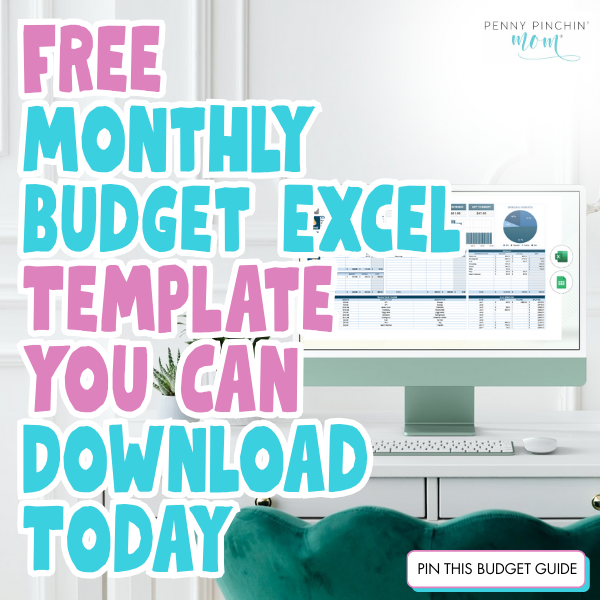
I’ve lost count of how many readers have told me they downloaded an Excel budget template, opened it once, and never touched it again. Usually, the problem isn’t motivation; it’s that the template didn’t fit their life. Too many categories. Weird income calculations. Tabs everywhere with no clear starting point.
Excel is still one of the best free budgeting tools out there. No monthly fees, no company storing your financial data, full control over every cell. But only if you pick a template that actually works for how your household operates, not some generic version built for a family that doesn’t exist.
What Actually Makes an Excel Budget Template Worth Using
Most Excel budget templates fail because they’re built for someone else’s life. You need one that matches how you get paid, how your household spends money, and how much time you’re willing to spend on budget maintenance.
Start with these non-negotiables:
- Clear separation between income and expenses with totals that calculate automatically
- Pre-built formulas that show whether you’re over or under budget each month
- Expense categories that make sense for a household, not a business
- Enough blank rows to add custom categories without breaking the spreadsheet
- A simple layout you can understand in under 5 minutes
Before you commit to any template, test these three things:
- Can you immediately tell where to enter your income? If you have to hunt for it, the template is too complicated.
- Are expense categories pre-labeled or completely blank? Pre-labeled saves time, but you need flexibility to change them.
- Does it calculate a monthly surplus or deficit automatically? If you have to do this math yourself, you’ll stop using it.
Too many templates try to do everything. Track net worth, project future savings, and calculate debt payoff timelines. That sounds helpful until you realize you just need to know if you can afford groceries this week. Extra features create decision fatigue and make maintenance harder.
The real value of Excel over budgeting apps comes down to control. You’re not locked into someone else’s category system. You can see exactly how formulas work. Your financial data lives on your computer, not a company’s server. And once you set it up, it’s free forever.
If you’ve tried budgeting apps and felt frustrated by monthly fees or rigid categories, Excel gives you the customization those apps charge premium tiers for, without the subscription.
How to Set Up Your Excel Budget the Right Way From Day One
The biggest mistake people make is downloading a template and immediately trying to track last month’s spending. That approach creates chaos because you’re sorting through receipts, trying to figure out where things belong instead of having a structure ready.
Set up your categories first, then start tracking.
Your template should have these core category groups with room to customize within each:
Income section:
- Primary job salary or wages
- Secondary income or side hustle earnings
- Any regular monthly income, like child support or rental income
Fixed expenses (same amount every month):
- Rent or mortgage
- Car payment
- Insurance premiums
- Loan payments
- Subscription services
Variable expenses (amount changes monthly):
- Groceries
- Gas
- Utilities
- Dining out
- Entertainment
- Clothing
- Household items
- Medical expenses
Periodic expenses (not every month, but predictable):
- Car registration
- Annual memberships
- Holiday gifts
- Home maintenance
Add or remove rows to match your actual spending. A single person doesn’t need a $400 grocery category. A family of four probably needs to split “household items” into separate categories for cleaning supplies, toiletries, and kids’ needs because lumping them together hides where money actually goes.
Here’s the income calculation that saves hundreds of dollars in budget errors:
If you get paid bi-weekly, don’t multiply your paycheck by 2 to estimate your monthly income. A month averages 4.33 weeks, not 4, so this method underestimates what you actually earn.
Instead: Take your bi-weekly net pay, multiply by 26 (the number of paychecks in a year), then divide by 12.
Example: $1,500 bi-weekly paycheck
- Wrong way: $1,500 × 2 = $3,000/month
- Right way: $1,500 × 26 = $39,000/year ÷ 12 = $3,250/month
That’s $250 more per month than the wrong calculation showed. Over a year, the wrong math makes your budget look $3,000 tighter than reality, which either causes unnecessary stress or leads to “mystery money” you can’t account for.
Add an essential versus discretionary tag to each expense category. Create a simple column next to your category list and mark each one as “E” for essential or “D” for discretionary.
Essential expenses: rent, utilities, minimum loan payments, basic groceries, insurance, and gas to get to work.
Discretionary expenses: streaming services, dining out, hobbies, upgraded phone plans, gym memberships you don’t use.
This tag tells you how long your emergency fund would actually last if you lost income tomorrow. If you have $3,000 saved and your essential monthly expenses total $2,000, your fund covers 1.5 months. If your total monthly budget is $3,500 but includes $1,500 in discretionary spending, your emergency fund stretches much further than you thought.
The tags also catch lifestyle creep before it becomes a problem. If discretionary spending grows from 30% to 50% of your budget over six months without you noticing, the tags make it visible.
How to Maintain Your Excel Budget Without Burning Out
Detailed daily expense tracking works at first, but most people quit after a few months because it takes too much time. The solution isn’t to track forever. It’s to track closely until you know your patterns, then shift to periodic check-ins.
For the first 3 months, update your Excel budget weekly. Pick the same day and time every week (Sunday evening works for most people) and spend 15 minutes entering expenses, checking totals, and comparing actual spending to your budgeted amounts.
This weekly habit reveals your real spending patterns. You’ll discover you budgeted $400 for groceries but consistently spend $550. Or that “miscellaneous” keeps hitting $200 because you forgot to budget for household repairs.
After 3 months of weekly tracking, you’ll probably reach a point where you already know where your money goes. The budget stops being a discovery tool and becomes a confirmation system.
That’s when you can shift to quarterly reviews. Instead of tracking every transaction, export your bank and credit card statements every three months and compare the totals to your budget categories. As long as spending stays within expected ranges (give yourself a 10-15% buffer), you don’t need to track daily.
If something jumps outside normal patterns (groceries suddenly spike to $800 for two months), that’s your signal to investigate and temporarily return to detailed tracking until you identify what changed.
Common mistakes that make Excel budget maintenance harder than it needs to be:
You’re trying to track every single transaction down to the penny. Track major categories instead. If you spent $547 on groceries this month, entering “$547 groceries” in one cell is enough. You don’t need line items for every shopping trip unless something looks wrong.
You’re updating the budget daily. This creates burnout fast. Batch your updates into one weekly session instead of logging into Excel every time you buy coffee.
You’re treating budget categories as fixed rules instead of estimates. If you budgeted $100 for gas and spent $120 because prices went up, that’s not failure; that’s information. Adjust next month’s budget to $120 and move on.
You’re using a different spreadsheet every month. Keep one file with tabs for each month so you can easily compare spending patterns over time. Create a new tab, copy the previous month’s structure, and update the numbers.
You’re not protecting your formulas. If you accidentally delete a formula cell, your totals break. In Excel, you can lock formula cells so you can only edit data entry cells. Look up “protect sheet” in Excel help if you’re worried about breaking something.
You’re intimidated by spreadsheets. This template uses only SUM formulas. If you can type numbers and watch totals update, you can use it.
The best budget template is one you’ll actually use. If Excel’s visual layout and control make budgeting feel less confusing, that matters more than using the “best” app everyone recommends.
Set up your categories before tracking anything. Commit to weekly updates for the first three months. Once you know your spending patterns, shift to quarterly reviews using bank statement exports instead of daily transaction logging.
Calculate bi-weekly income by multiplying by 26, then dividing by 12 for accurate monthly figures. And tag expenses as essential or discretionary. It shows you how far your emergency fund actually stretches and catches lifestyle creep before it derails your progress.
The goal isn’t to track every dollar forever. It’s to understand where your money goes, make intentional adjustments, and build a system that works for your life without requiring hours of maintenance every week.